White papers

Technical depth for the people who check the basis. Clause, workflow, proof.

White papers help engineering, IT, and security reviewers understand how the record is built and defended.

Published papers

Search by theme or standard.

Enterprise controls

A security review checklist for asset integrity software

An inspection software security review checklist for asset integrity platforms: identity, tenant isolation, audit trail, encryption, the field device, what to do when a vendor has controls but no SOC 2 report, and the new surface that AI features add.

Sep 03, 2026 · SOC 2, ISO 27001
Grounded AI

Agentic actions with approval gates: the human signs

An AI approval gate in industrial software decides what an assistant may do to your records and who has to sign first. Which actions to allow, how approvals should expire and escalate, what to block outright, and what the audit trail must show.

Sep 03, 2026
Standards coverage

API 510 vessel inspection: what the record must carry

What API 510 inspection requirements mean for software: the record a pressure vessel file must carry, from corrosion rates and remaining life to the interval, MAWP, repairs and the audit trail an inspector can defend.

Sep 03, 2026 · API 510, ASME VIII
Standards coverage

API 570 piping circuits: circuitization to interval

How API 570 piping inspection software should carry a program from circuitization through class, CML placement, corrosion rate and remaining life to a defensible interval, with API 574 guidance on where the readings belong.

Sep 03, 2026 · API 570, API 574
Standards coverage

API 571 damage mechanisms as an inspection strategy

How API 571 damage mechanisms turn a list of equipment into an inspection strategy: running the damage mechanism review, assigning mechanisms to circuits and components, choosing NDE by mechanism, and recording it so RBI and the inspection plan inherit it.

Sep 03, 2026 · API 571
Standards coverage

API 576 relief device inspection: intervals and records

A working guide to API 576 relief valve inspection: how test intervals are set and justified, what the as-found pop test tells you, and the record each pressure relief device needs so the next interval can be defended.

Sep 03, 2026 · API 576, API 520
Standards coverage

API 579 fitness for service: levels 1 to 3 in practice

How an API 579 fitness for service assessment moves from Level 1 screening to Level 2 and Level 3 engineering, part by part for metal loss, pitting and crack-like flaws, and what the assessment record must document to stand up later.

Sep 03, 2026 · API 579-1/ASME FFS-1
Standards coverage

API 580 and 581: a defensible RBI program

How an API 580 581 RBI program earns its intervals: probability and consequence built from documented data, inspection effectiveness that can be shown, risk targets that are written down, and a reassessment cycle that actually runs.

Sep 03, 2026 · API 580, API 581
Standards coverage

API 583 CUI: a program, not a campaign

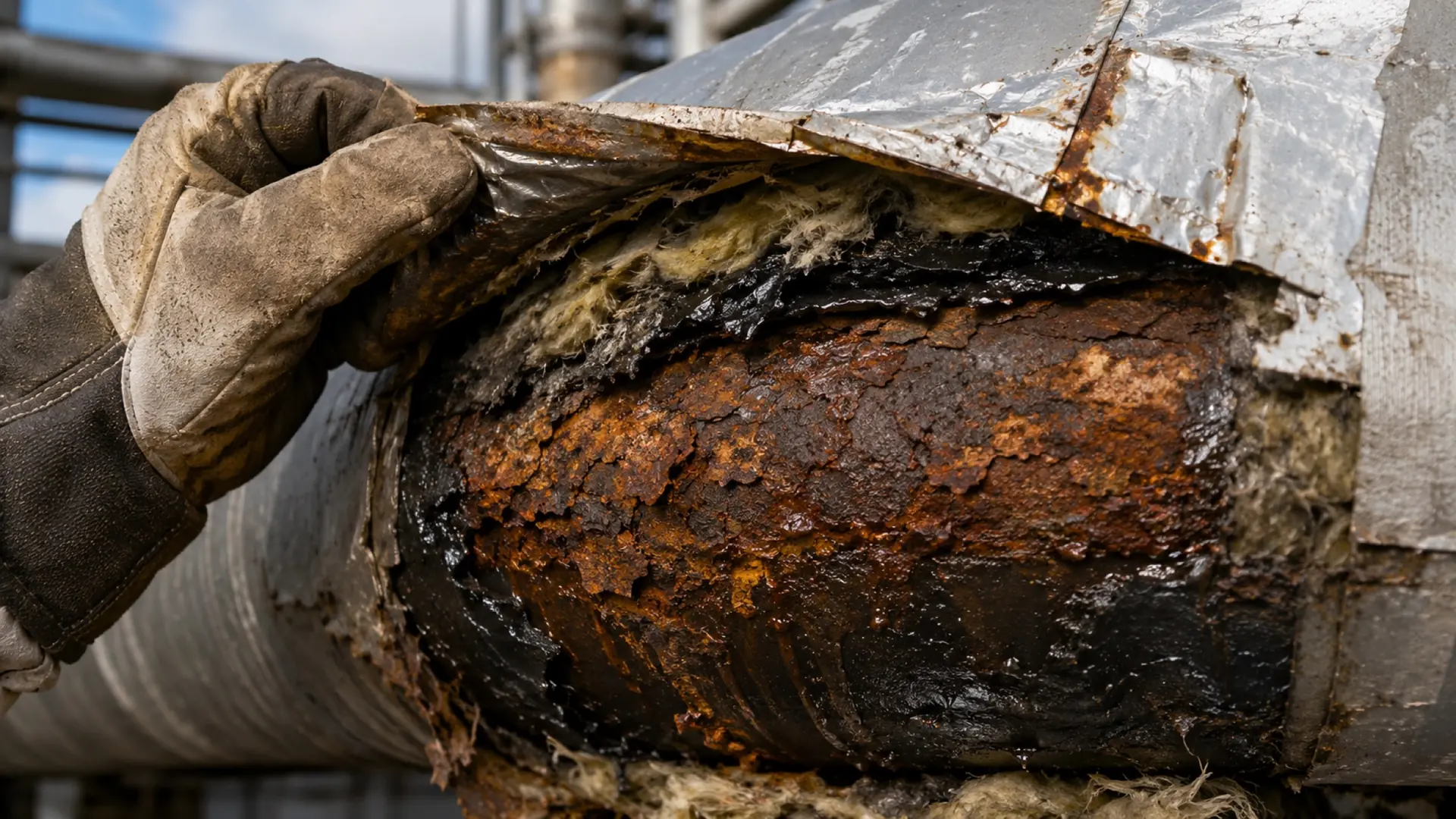
Why a corrosion under insulation program outlasts a CUI campaign: API 583 susceptibility ranges, the locations API 570 tells you to look, screening NDE versus insulation removal, repair and recoat, and the frequency reassessment that closes the loop.

Sep 03, 2026 · API 583, API 570
Standards coverage

API 653 tank inspection: floor, shell, and settlement

What API 653 tank inspection software must record: bottom minimum remaining thickness, shell one-foot method checks against the API 650 basis, settlement surveys to Annex B, and the intervals that follow from each.

Sep 03, 2026 · API 653, API 650
Standards coverage

ASME PCC-2 repairs: recording the fix with the finding

What ASME PCC-2 repair records must carry: the repair article chosen, the design basis, the examination and test that closed it, and the link back to the finding, so temporary repairs are tracked to closure and permanent ones survive audit.

Sep 03, 2026 · ASME PCC-2
Industry playbooks

Chemicals: damage mechanisms across many small units

Chemical plant integrity software has a different problem from a refinery: dozens of small units, changing chemistry, and damage mechanisms that vary by campaign. How the record should handle it.

Sep 03, 2026 · API 571, API 580
Integrity engineering

CML and TML management at plant scale

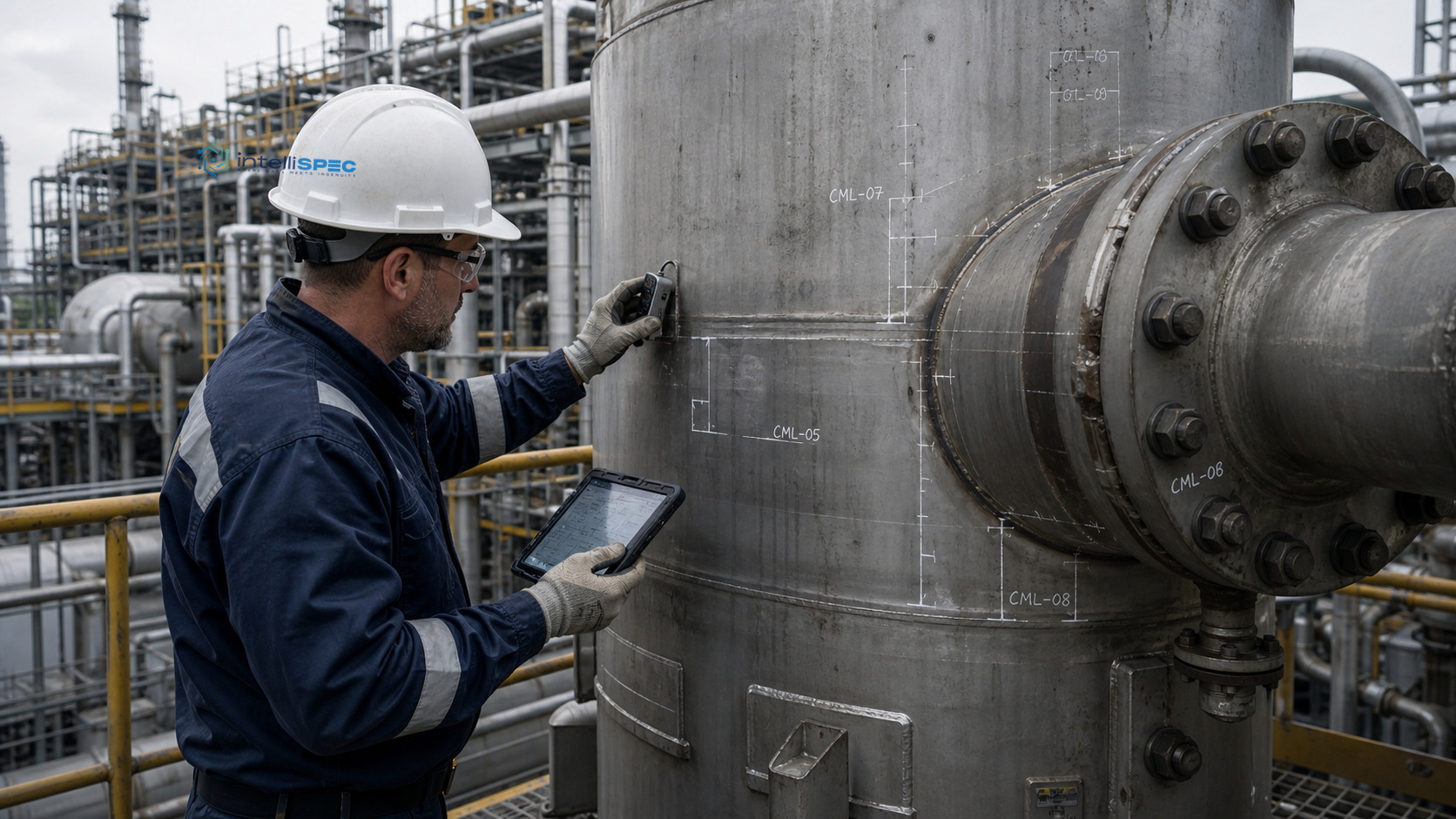
What CML management software has to get right when a site carries tens of thousands of condition monitoring locations: circuitization, CML selection under API 570, durable identity, drawing linkage, gauge capture, history through repairs and the governance of adding and retiring points.

Sep 03, 2026 · API 570, API 510
Standards coverage

Coating inspection to AMPP and SSPC: the hold points

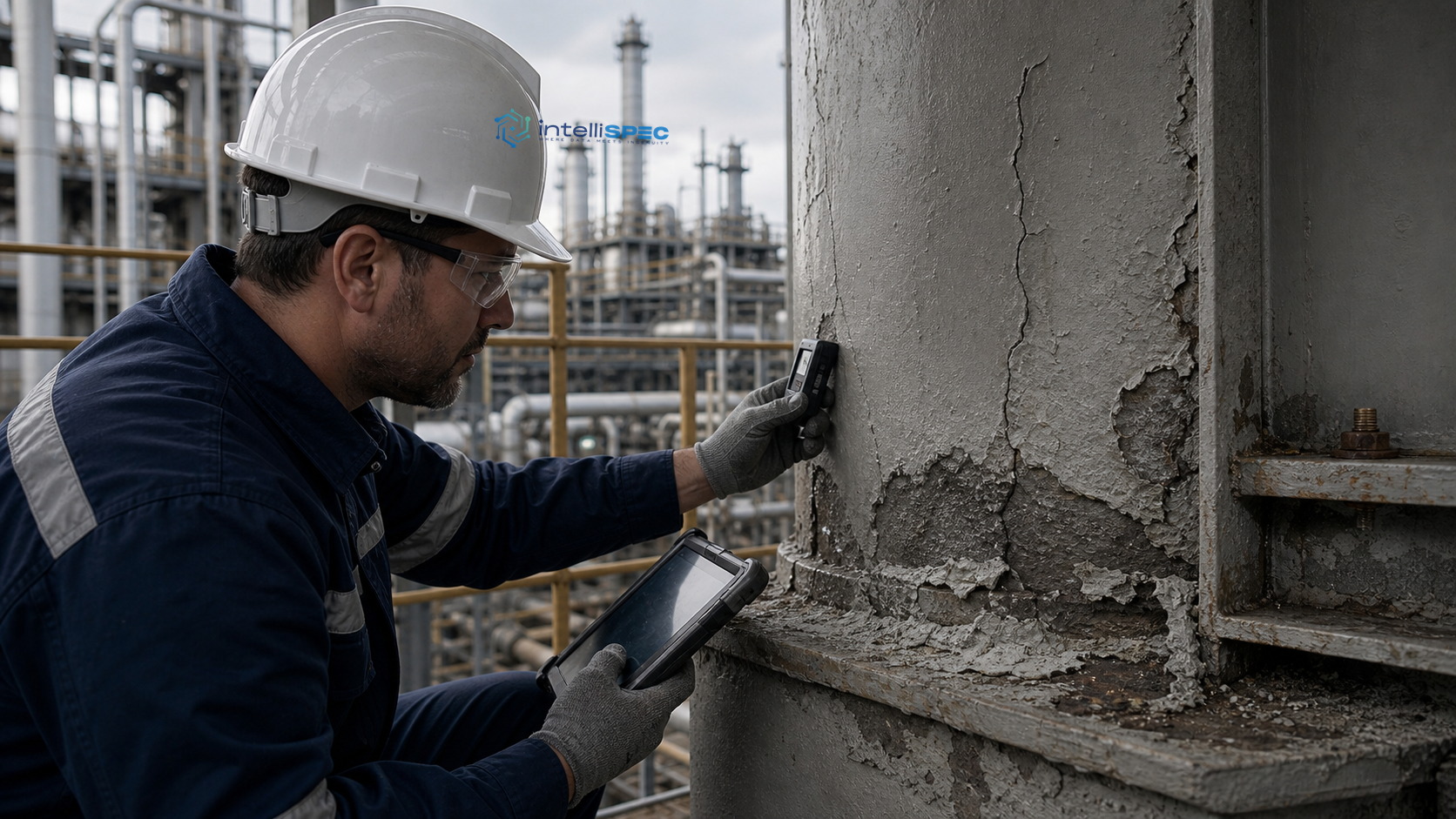
What coating inspection software has to record at each AMPP and SSPC hold point: surface profile, ambient conditions, SSPC-PA 2 dry film thickness statistics, holiday testing and the exception report that survives a warranty dispute.

Sep 03, 2026 · AMPP, SSPC-PA 2
Integrity engineering

Corrosion rate: short term, long term, and which governs

How corrosion rate calculation works under API 510 and API 570: the long-term and short-term formulas, why the two disagree, when measurement noise is the real signal, and how the governing rate should be chosen and recorded.

Sep 03, 2026 · API 510, API 570
Turnaround execution

Crew readiness: qualifications, permits, and hours

Turnaround crew management software has one job: prove that every person on the asset was qualified, permitted, and rested. What that record must carry, what OSHA 1910.146 requires on a confined space permit, and how to run dispatch against it.

Sep 03, 2026 · OSHA 1910.146
Data migration

Data validation rules for inspection records

A thickness reading with a dropped decimal becomes a corrosion rate, then an interval, then a missed inspection. The inspection data quality rules that belong at capture, at review and at calculation time, and how to apply them without losing the reading.

Sep 03, 2026
Integrity engineering

Dead legs and injection points: what circuits hide

A dead leg inspection program under API 570: how to find dead legs and injection points, how to circuit them, where to place CMLs, and what the record must carry so the stagnant end is never the forgotten end.

Sep 03, 2026 · API 570
Field capture

DICONDE and digital radiography in the equipment record

Radiography images live on a workstation, the report lives in a folder, and the weld record says accept. What DICONDE software must do so digital radiography stays attached to the equipment record for the life of the asset.

Sep 03, 2026 · ASTM E2339
Turnaround execution

Discovery work: keeping scope growth honest and recorded

Turnaround discovery work management is where budgets and schedules break. How to record found work with evidence, approve it inside the shift, and separate true discovery from scope that planning missed.

Sep 03, 2026
Enterprise controls

Encryption, keys, and data residency for industrial SaaS

Industrial SaaS encryption and data residency, explained for a security review: what encryption at rest actually covers, TLS in transit, application-layer protection of secrets, encrypted offline devices, and the residency questions to put to a vendor.

Sep 03, 2026 · SOC 2
Data migration

Equipment hierarchy design that survives reorganizations

Units get renamed, sites get sold, and the asset hierarchy that inspection history hangs from breaks every time. Asset hierarchy design for inspection, using the ISO 14224 taxonomy, that keeps identity stable when the organization chart does not.

Sep 03, 2026 · ISO 14224
Grounded AI

Evaluating AI claims in inspection software

An AI inspection software evaluation checklist for integrity teams: grounding, citations, action controls, approval gates, evaluation evidence, and the questions that separate a demo from a defensible tool.

Sep 03, 2026
Turnaround execution

Exchanger bundle inspection inside the window

Heat exchanger bundle inspection during a turnaround decides the critical path. What API 510 requires, which tube inspection method fits which bundle, and what the bundle record must carry to make the plug-or-retube call.

Sep 03, 2026 · API 510, TEMA
Enterprise controls

Exports, retention, and leaving: your data on your terms

Inspection data export portability: what a complete export of the asset record contains, why an open API changes the exit question, what retention has to preserve, what happens to the audit trail, and how to test portability before you sign.

Sep 03, 2026
Integrity engineering

Fitness for service after a finding: the decision record

FFS decision documentation under API 579-1/ASME FFS-1: what a fitness-for-service record must carry after a finding, from applicability and data through assessment level, remaining life, and the engineer's sign-off.

Sep 03, 2026 · API 579-1/ASME FFS-1
Data migration

From spreadsheets and PDFs to a queryable record

Most inspection history lives in workbooks and signed PDFs that only their author can read. A practical method for Excel to IDMS migration, column by column and report by report, that ends with a record you can query instead of open.

Sep 03, 2026
Grounded AI

Grounded AI for integrity: every answer cites its source

Grounded AI inspection software answers only from your own records and shows where each answer came from. What grounding means for an integrity program, how retrieval over tenant records works, what a citation must carry, and how to test it.

Sep 03, 2026
Integrity engineering

Inspection intervals: half life, RBI, and the cap

Inspection interval calculation under API 510, API 570 and API 653: how remaining life sets the half-life cap, where the fixed maximums sit, what RBI can and cannot change, and what the interval record must carry.

Sep 03, 2026 · API 510, API 570, API 653
Field capture

Inspection photos as evidence: binding, time, and chain

Inspection photo evidence management for integrity programs: binding a photo to the component and finding at capture, trusting its time and location, and keeping a chain of custody that survives audits and incident investigations.

Sep 03, 2026
Data migration

Legacy report archives: making twenty years searchable

Two decades of signed inspection reports sit in folders and filing cabinets, unread because they cannot be searched. A method for inspection report archive digitization that indexes everything, extracts what matters, and keeps the archive defensible.

Sep 03, 2026
Industry playbooks

LNG: cryogenic assets and the inspection program

LNG inspection software has to work around assets that are rarely opened: API 620 and API 625 tanks, cryogenic piping, cold insulation, and a program built on external evidence and long intervals.

Sep 03, 2026 · API 625, API 620
Field capture

Metadata driven forms: change the workflow, not the code

Inspection procedures change every year and software releases do not keep up. How configurable inspection forms built from metadata let a plant change fields, rules and workflow without a developer, while completed records stay exactly as executed.

Sep 03, 2026
Data migration

Migrating an IDMS: registers, CMLs, and history intact

An IDMS migration is judged by one test, whether every corrosion rate, remaining life and next inspection date computes the same after cutover as before. A method for moving registers, CMLs and history without losing either.

Sep 03, 2026
Integrity engineering

Minimum thickness and MAWP: the numbers auditors reread

How a minimum thickness and MAWP calculation is built, which inputs it depends on, and what the record must carry so an auditor can rerun the number years later and get the same answer.

Sep 03, 2026 · ASME VIII, API 510
Industry playbooks

Mining: fixed plant integrity in abrasive service

Mining fixed plant inspection software has to keep pace with wear: slurry piping, autoclaves and pressure vessels, mills and chutes, remote sites with no signal, and statutory inspections under AS/NZS 3788.

Sep 03, 2026 · API 570, AS/NZS 3788
Standards coverage

NFPA 25 records: proving fire protection inspection

What NFPA 25 inspection records software has to prove: that each inspection, test and maintenance activity on water-based fire protection happened at the required frequency, who did it, what was found, how impairments were handled, and how long records are kept.

Sep 03, 2026 · NFPA 25, NFPA 72
Field capture

Offline first inspection: thirty days without signal

What offline inspection software has to do when a turnaround runs thirty days inside a steel structure with no coverage: full capture, no expiry on the local store, field-level conflict handling, and encryption on the device.

Sep 03, 2026
Standards coverage

OSHA PSM mechanical integrity: the audit-ready trail

What OSHA PSM mechanical integrity software must prove under 29 CFR 1910.119(j): covered equipment, written procedures, RAGAGEP-based inspection and test records, deficiency handling, and an audit trail a compliance auditor can verify.

Sep 03, 2026 · OSHA 1910.119
Industry playbooks

Pharma: facility integrity records under GMP scrutiny

Pharmaceutical facility inspection software is judged by quality auditors, not only by integrity engineers. What Part 11 asks of electronic records, what ASME BPE asks of the equipment, and how the record has to behave.

Sep 03, 2026 · 21 CFR Part 11, ASME BPE
Industry playbooks

Pipelines and terminals: tanks, piping, and integrity

Pipeline terminal integrity software has to hold three programs in one record: API 653 breakout tanks, API 570 station piping, and the 49 CFR 195 integrity management evidence a PHMSA inspector will ask for.

Sep 03, 2026 · API 653, API 570, 49 CFR 195
Turnaround execution

Post turnaround baselines: resetting the record

The post turnaround inspection baseline is the most valuable record an integrity program writes. How replaced and repaired components reset nominal thickness, corrosion rates, remaining life, and the next API 510 and API 570 interval.

Sep 03, 2026 · API 510, API 570
Industry playbooks

Power generation: boilers, HRSGs, and the outage record

Power plant inspection software has to serve the outage: boiler tubes, HRSG harps and headers, jurisdictional inspections under NBIC, and a record that explains every tube failure since the unit was built.

Sep 03, 2026 · ASME I, NBIC
Integrity engineering

RBI: probability, consequence, and the matrix

What RBI software for risk based inspection must do under API 580 and API 581: build probability of failure from damage mechanisms and inspection effectiveness, build consequence from release and financial models, rank on the matrix, and turn the ranking into a plan that is reassessed.

Sep 03, 2026 · API 580, API 581
Industry playbooks

Refining: the integrity record across a turnaround cycle

Refinery inspection software has to carry the integrity record from one turnaround to the next: API 510 vessels, API 570 circuits, API 653 tanks, and the scope, findings, and repairs that link them.

Sep 03, 2026 · API 510, API 570, API 653
Integrity engineering

Remaining life and the next inspection date

Remaining life calculation for a pressure vessel, piping circuit or tank: how tMin is set by the design code, how the governing corrosion rate turns it into years, and how API 510, API 570 and API 653 cap the interval to the next inspection date.

Sep 03, 2026 · API 510, API 570, API 653
Enterprise controls

Role based access for inspection software

RBAC for inspection software permissions: which permissions to separate, how roles map to an inspection organization, why node-level data entitlement matters, and the segregation-of-duties rules integrity data needs.

Sep 03, 2026 · SOC 2
Turnaround execution

Scoping a turnaround from inspection history

How to build a turnaround inspection scope from inspection history rather than the last event's list: API 510 and API 570 interval logic, corrosion rates and remaining life, where RBI fits, how damage mechanisms and CUI history change the scope, and turning it into work packs.

Sep 03, 2026 · API 510, API 570
Enterprise controls

SSO and identity for plant software

SSO for inspection software: SAML 2.0 versus OpenID Connect, contractor onboarding and offboarding through the identity provider, MFA for the accounts SSO does not cover, shared field tablets, and API keys as identities.

Sep 03, 2026 · SAML 2.0, OIDC
Enterprise controls

Tenant isolation at the query layer

Inspection data describes where a plant is weakest, so multi tenant SaaS isolation for industrial operators has to be enforced where queries run, not where the user logs in. Where isolation can fail, how to prove it, and what to ask a vendor.

Sep 03, 2026 · SOC 2
Enterprise controls

The immutable audit trail: what it records

What an audit trail in inspection software must record to satisfy 21 CFR Part 11 and SOC 2 reviewers: every event with actor and context, reads as well as writes, a hash chain an auditor can verify, and no deletion.

Sep 03, 2026 · 21 CFR Part 11, SOC 2
Turnaround execution

Turnaround readiness gates the inspection team owns

Turnaround readiness software from the inspection team's side: the gates inspection must pass before the unit comes down, from a scope traceable to history, through crew qualification and dispatch, to field kit that works offline and daily progress in one record.

Sep 03, 2026
Field capture

UT thickness data: gauge to record without retyping

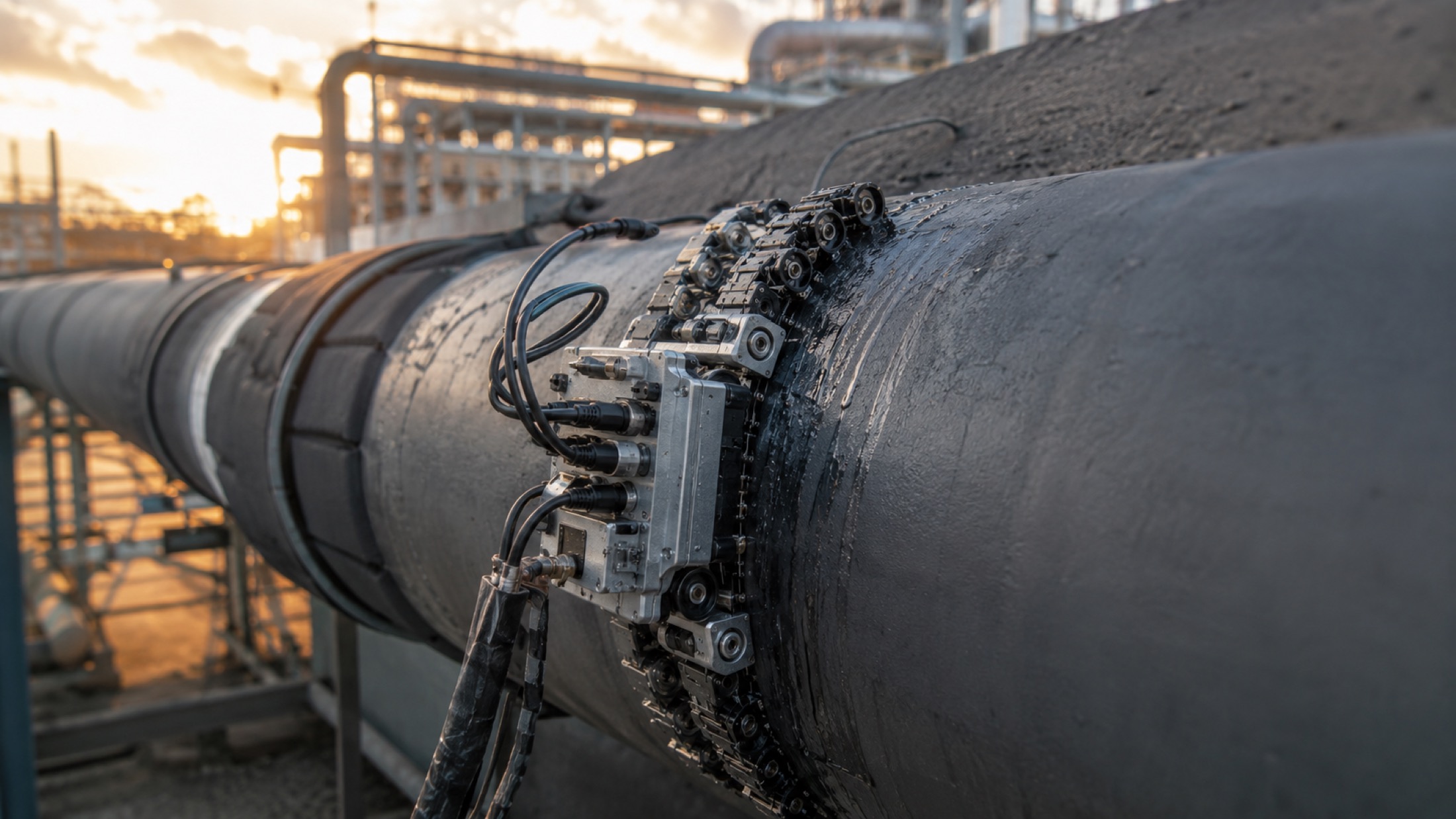
UT thickness data management from gauge to record: why retyped readings corrupt corrosion rates, what ASME Section V asks of the measurement, and how direct instrument input, CML identity, and an audit trail keep the number that was measured.

Sep 03, 2026 · ASME V
Grounded AI

Vision on field photos: drafting the finding for review

AI photo inspection analysis should draft the finding, not file it. How vision models read field photos and video, what a drafted finding must carry, where the inspector stays in the loop, and how the record shows what the model proposed.

Sep 03, 2026
Grounded AI

Voice to form: how speech becomes a structured reading

Voice to form AI field data capture turns a spoken observation into typed fields with units, ranges, and a review step. Why dictation is not enough, how the form definition constrains the output, and what the record shows afterward.

Sep 03, 2026
Field capture

Voice to record: structured capture for gloved hands

Voice inspection data capture done properly: how speech becomes structured fields rather than orphaned audio, what the inspector must confirm before a record is written, and how the approval and audit controls keep a spoken finding defensible.

Sep 03, 2026

Technical themes

Written so reviewers can check the basis.

Each paper covers the standards, data, and controls a technical reviewer has to verify before recommending a rollout.

01

Standards coverage

API, ASME, AMPP, NFPA, and OSHA basis for the relevant workflow, clause by clause.

02

Integrity engineering

Corrosion rates, remaining life, CML strategy, RBI, and fitness for service, with the math shown.

03

Field capture

Offline forms, images, voice, UT and DICONDE data, and signatures as structured evidence.

04

Data migration

How registers, CMLs, spreadsheets, and PDF archives become one queryable record.

05

Enterprise controls

Identity, tenant isolation, audit trails, encryption, security review, and exports.

06

Turnaround execution

Readiness gates, scope, discovery, crews, and the post-turnaround baseline.

07

Grounded AI

Cited answers, voice to form, vision on photos, and approval gates before action.

08

Industry playbooks

How the record is built in refining, chemicals, power, LNG, pipelines, pharma, and mining.

Answers

White Papers questions

What topics do the white papers cover?

Eight technical themes: standards coverage (API, ASME, AMPP, NFPA, OSHA), integrity engineering (corrosion rate, remaining life, RBI, fitness for service), field capture, data migration, enterprise controls, turnaround execution, grounded AI, and industry playbooks.

Who are the white papers written for?

The reviewers who have to defend a recommendation internally: inspection and integrity engineers, IT architects, and security teams running due diligence.

Are the papers free to read?

Yes. Every paper on this page is published in full with no download form. Each one opens with key takeaways and closes with the questions it answers, so a reviewer can check the basis before a call.

Do the papers cover security posture?

Enterprise controls (identity, tenant isolation, audit trails, report exports) are one of the four themes. For the current security and compliance posture, the Trust Center is the source of record.

Request the technical packet for your workflow.

We will send the material that matches your modules, standards, and buyer role.