
Corrosion rates on every circuit
intelliNDT lands UT thickness readings on the CML, and corrosion rate and remaining life recompute to API 570 and API 510 the moment they sync. No spreadsheet in between.
Industry
intelliSPEC gives integrity engineers and PSM coordinators one mechanical integrity record that runs from the CML to the audit, under OSHA PSM 1910.119 in the US and the Seveso III Directive in Europe.

PSM evidence ledger
Chemical plants do not fail all at once. They fail at a circuit, a nozzle, a wet patch of insulation, and the record has to be sharp exactly there.
Where the risk lives
Chemical plants do not fail all at once. They fail at a circuit, a nozzle, a wet patch of insulation, and the record has to be sharp exactly there.
intelliNDT lands UT thickness readings on the CML, and corrosion rate and remaining life recompute to API 570 and API 510 the moment they sync. No spreadsheet in between.
intelliINTEGRITY runs RBI to API 580 and 581 to rank every vessel and circuit by probability and consequence, and FFS to API 579 turns a degraded finding into a defensible run, repair, or replace call.

intelliCOMPLY keeps permits, JSAs, deficiencies, and closeouts tied to the asset, so the mechanical integrity evidence OSHA 1910.119 and an EPA RMP prevention program expect is a query, not a project.
intelliTURN builds work packs from the risk ranking and carries gate decisions with the inspection findings behind them, from scope freeze through startup.
One unit, one day
The record starts on the pipe rack and ends in front of an auditor. Same thread, no retyping.
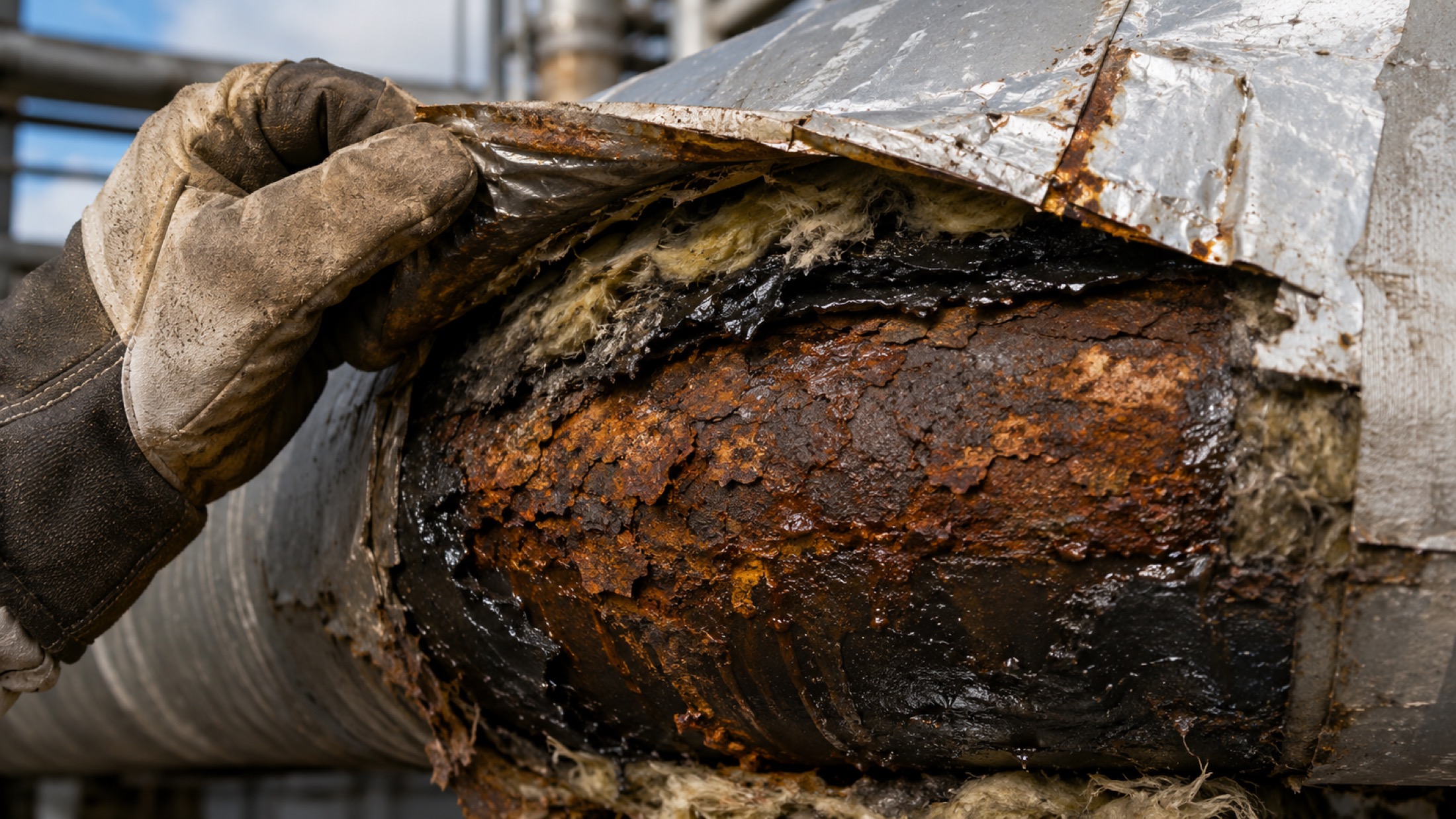
An inspector opens the insulation on a hot circuit, takes the UT reading, photographs the CUI, and signs it at the asset. Offline, because dead zones in an operating unit do not excuse a gap in the record.
On sync, the corrosion rate updates, the API 570 interval shortens, and intelliINTEGRITY flags the circuit for an API 579 assessment. The integrity engineer sees the change the same day, not at the annual review.
When the PSM auditor asks for that circuit's history, the readings, rates, decisions, and signatures export as one thread under 1910.119(j). Nobody rebuilds it from email.
Proof path
Bring one unit, one vessel, or one corrosion circuit and we will map the record end to end.
Thickness, corrosion rate, and remaining life to API 510 and API 570 in intelliNDT.
RBI to API 580 and 581 and FFS to API 579 in intelliINTEGRITY, on the same asset record.
CUI findings to API 583 and coating condition in intelliPAINT, tied to the circuit they protect.
Answers
Every inspection, test, deficiency, and correction is tied to the specific asset with user, timestamp, and signature, matching the evidence structure OSHA PSM 1910.119(j) describes. intelliSPEC organizes the workflow and audit trail rather than certifying compliance on your behalf.
Yes. intelliINTEGRITY carries the RBI analysis to API 580 and 581, ranks equipment by probability and consequence of failure, and sets inspection intervals that recompute as new thickness data arrives from the field.
intelliSPEC holds the FFS record to API 579-1/ASME FFS-1: the flagged finding, the assessment inputs, and the resulting run, repair, or replace decision, all on the asset's permanent history. The engineering judgment stays with your engineers.
Corrosion under insulation programs run as targeted visual and UT scopes in intelliINSPECT and intelliNDT, prioritized by the susceptible temperature ranges API 583 describes, with coating condition and repairs logged in intelliPAINT against the same circuit.
Yes. The same asset record maps pressure equipment inspections to EN 13445 and the Pressure Equipment Directive, and organizes the mechanical integrity evidence a Seveso III safety report draws on, so European and US plants run one standard.
Plants running intelliTURN build the scope from the RBI ranking, hold work packs and gate decisions in one place, and carry findings from scope freeze through startup, so discovery work is quantified instead of argued.
Yes. Each circuit carries its CMLs, thickness history, corrosion rate, and next inspection date to API 570, and a reading below retirement thickness raises a flag at sync, not at the next paper review.