0101 / 08
CML Corrosion Rate Calculator
Short, long, and maximum rates on one engine, so every analyst reaches the same number.
Non-destructive examination
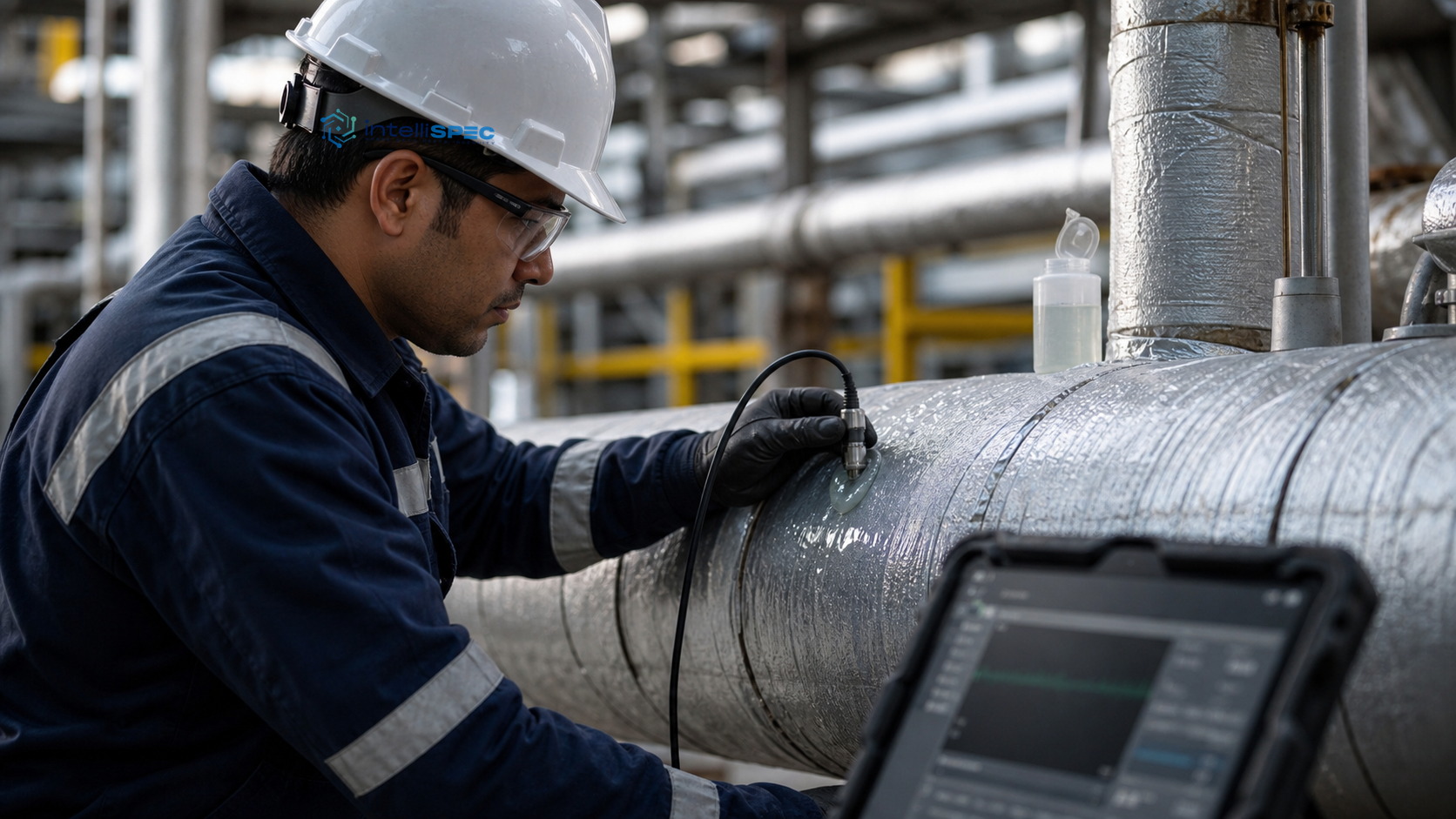
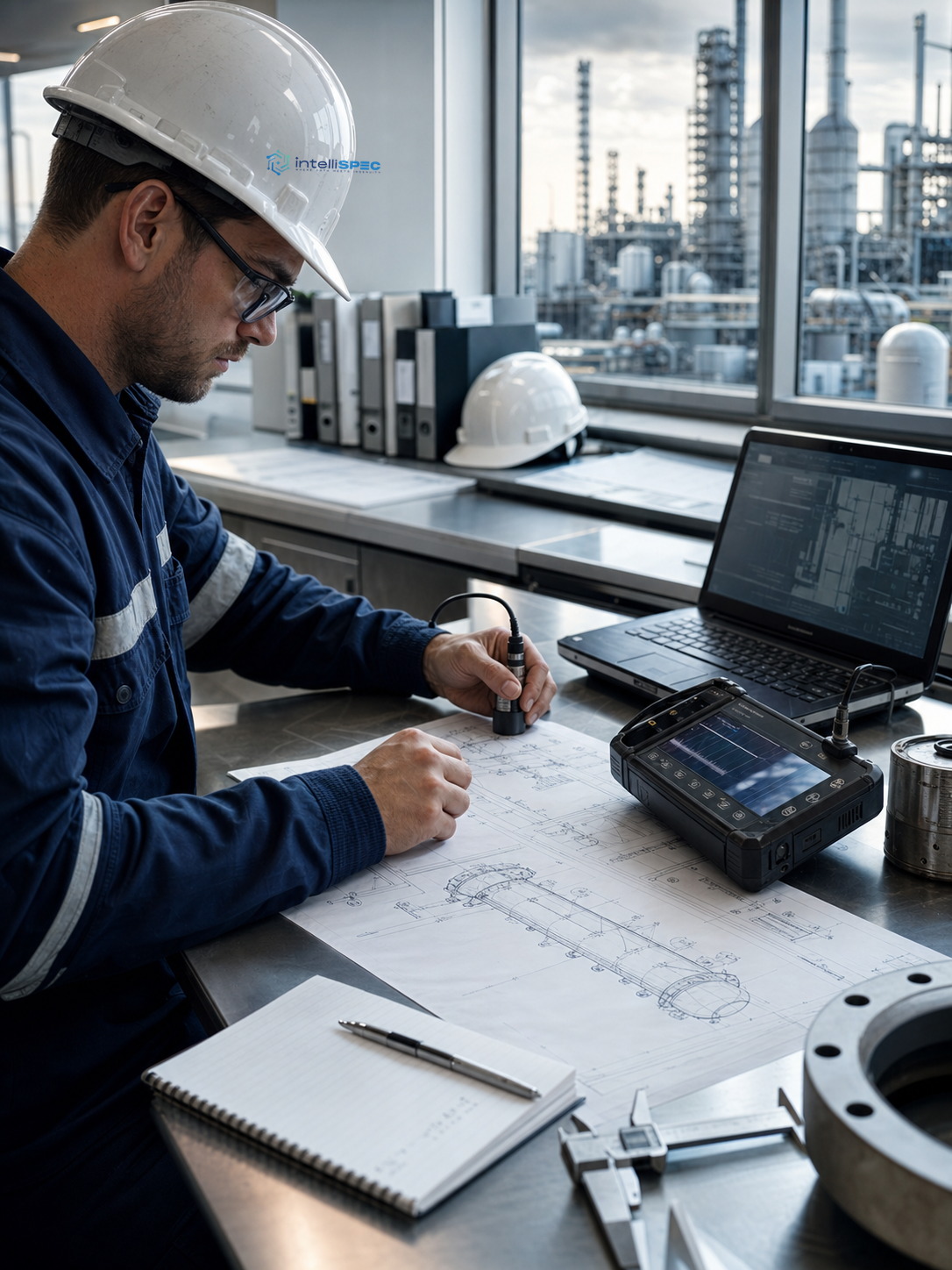
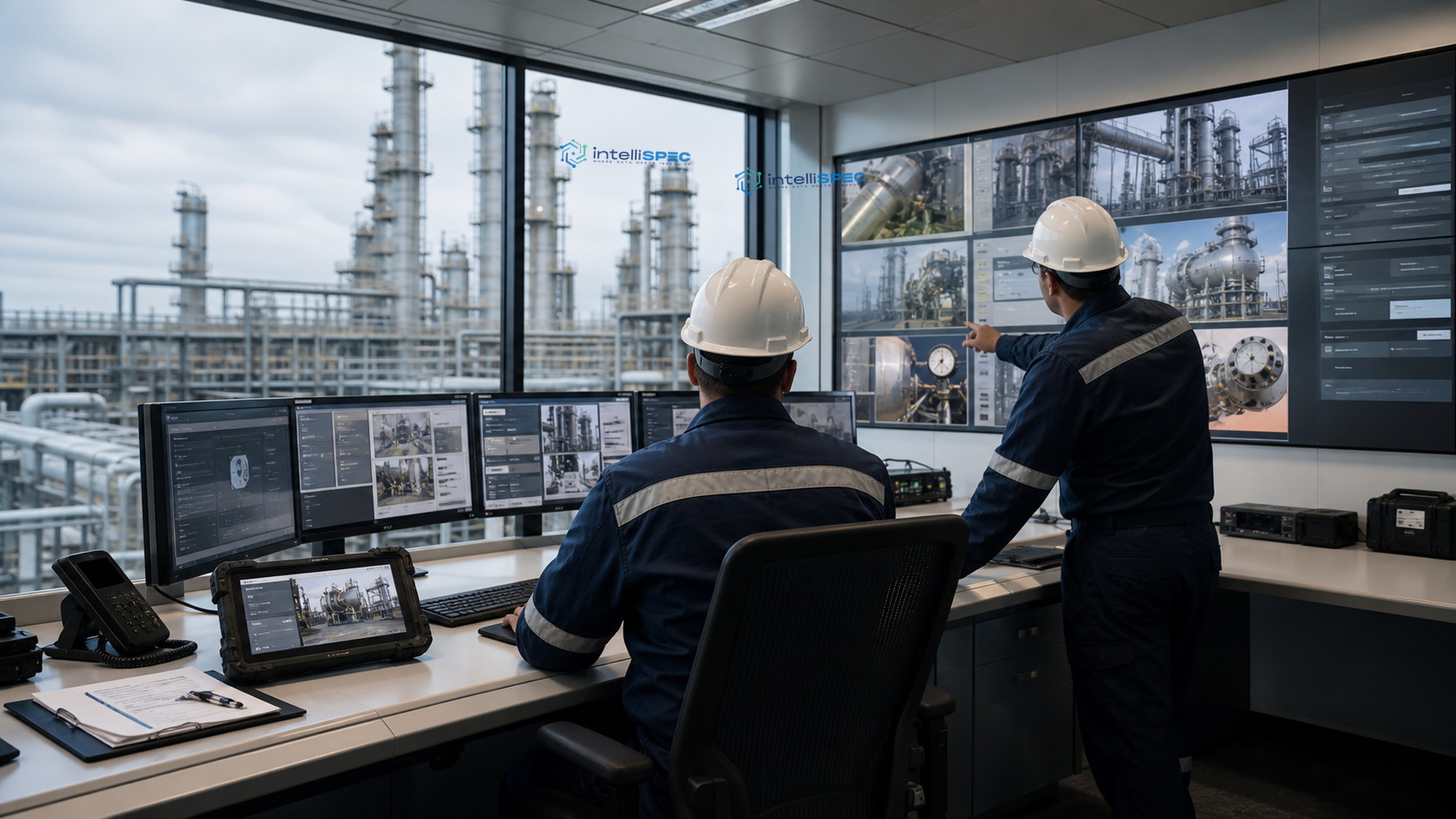
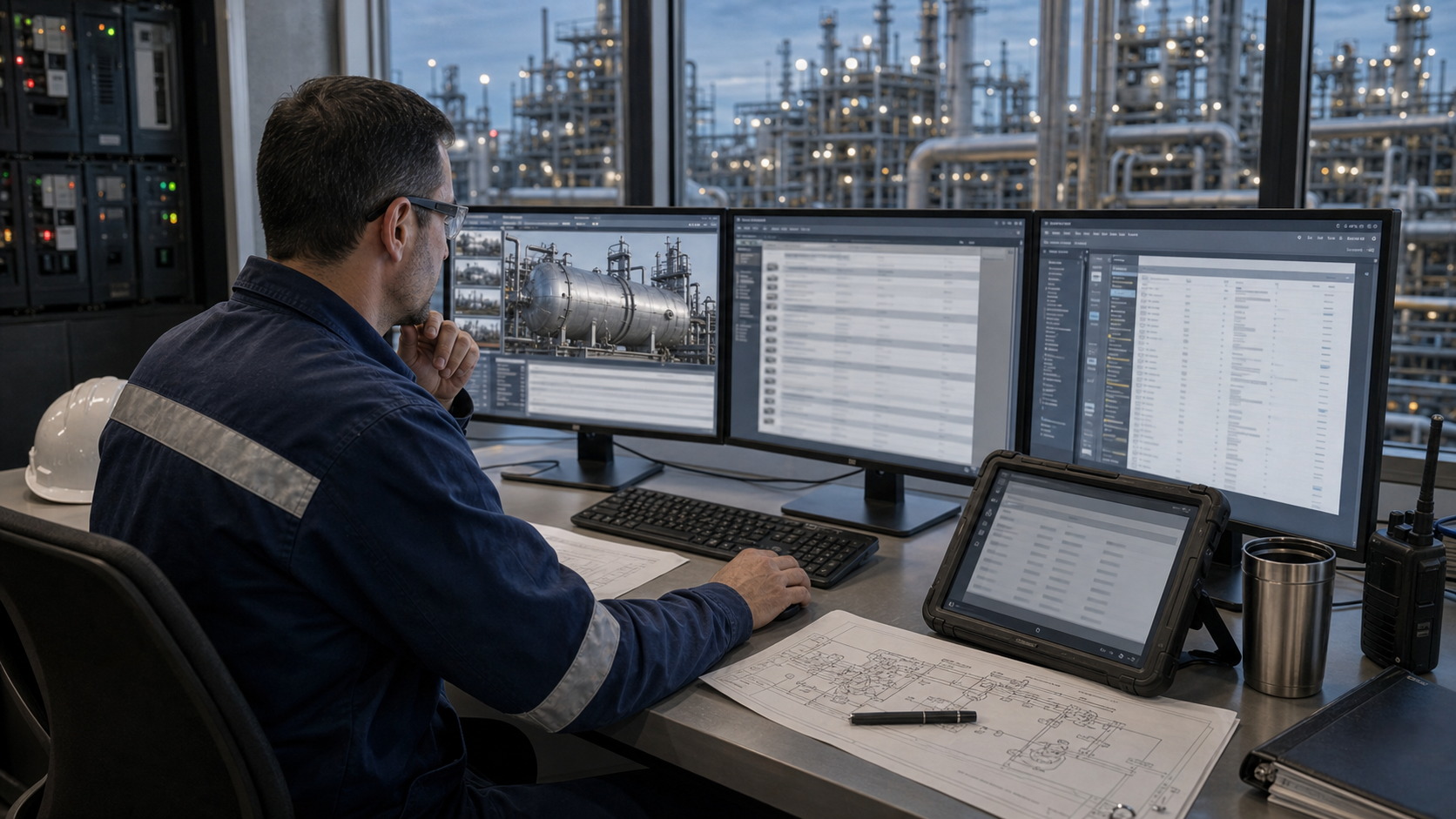
For NDE analysts who own the wall thickness. Take the reading or stream the scan, and one compute engine turns it into a corrosion rate, a remaining life, and the verdict integrity reads.
Built in, not bolted on
Each layer of the wall carries its own reading, corrosion rate, and ASME basis, then hands the remaining life to integrity.
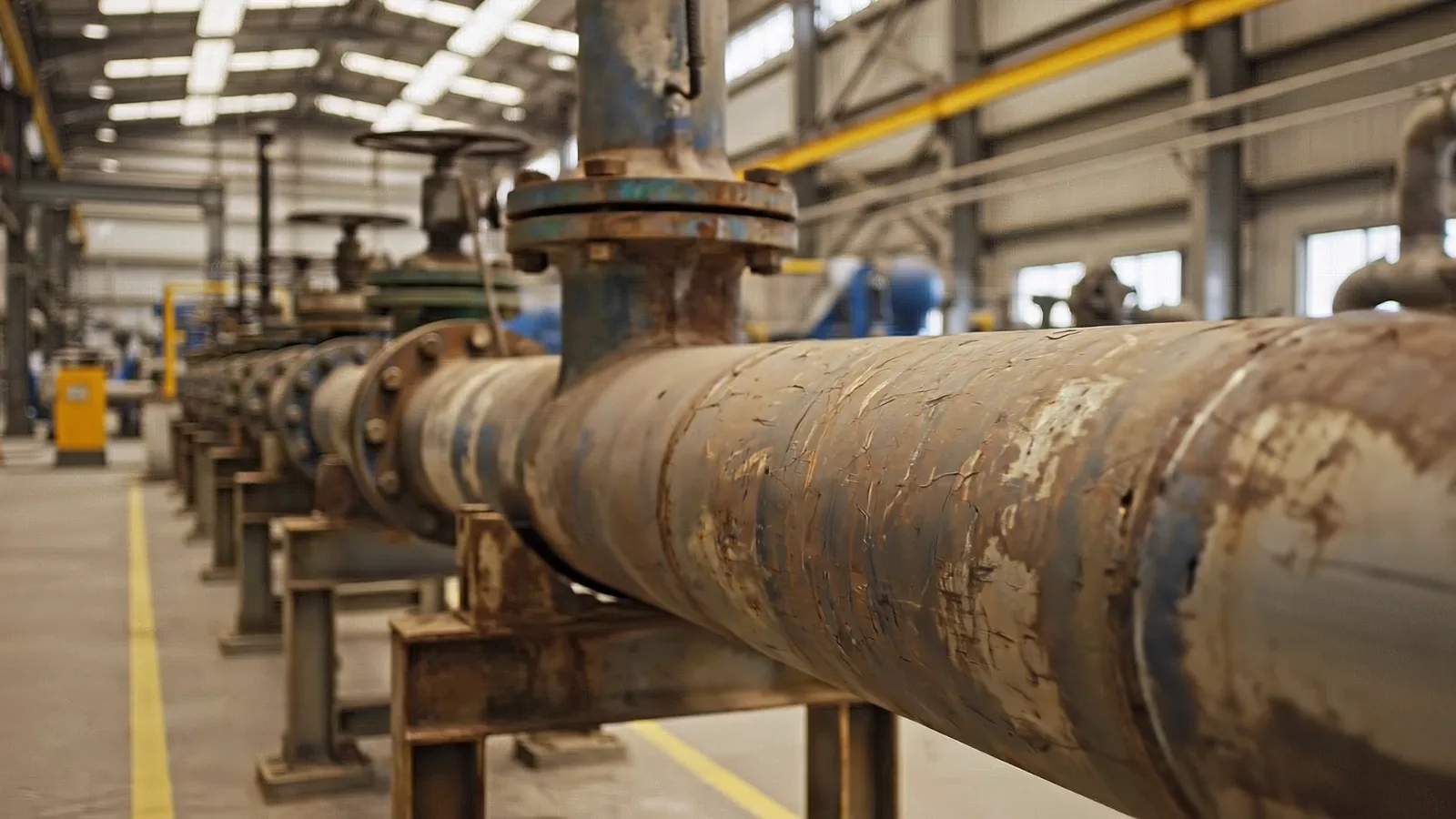
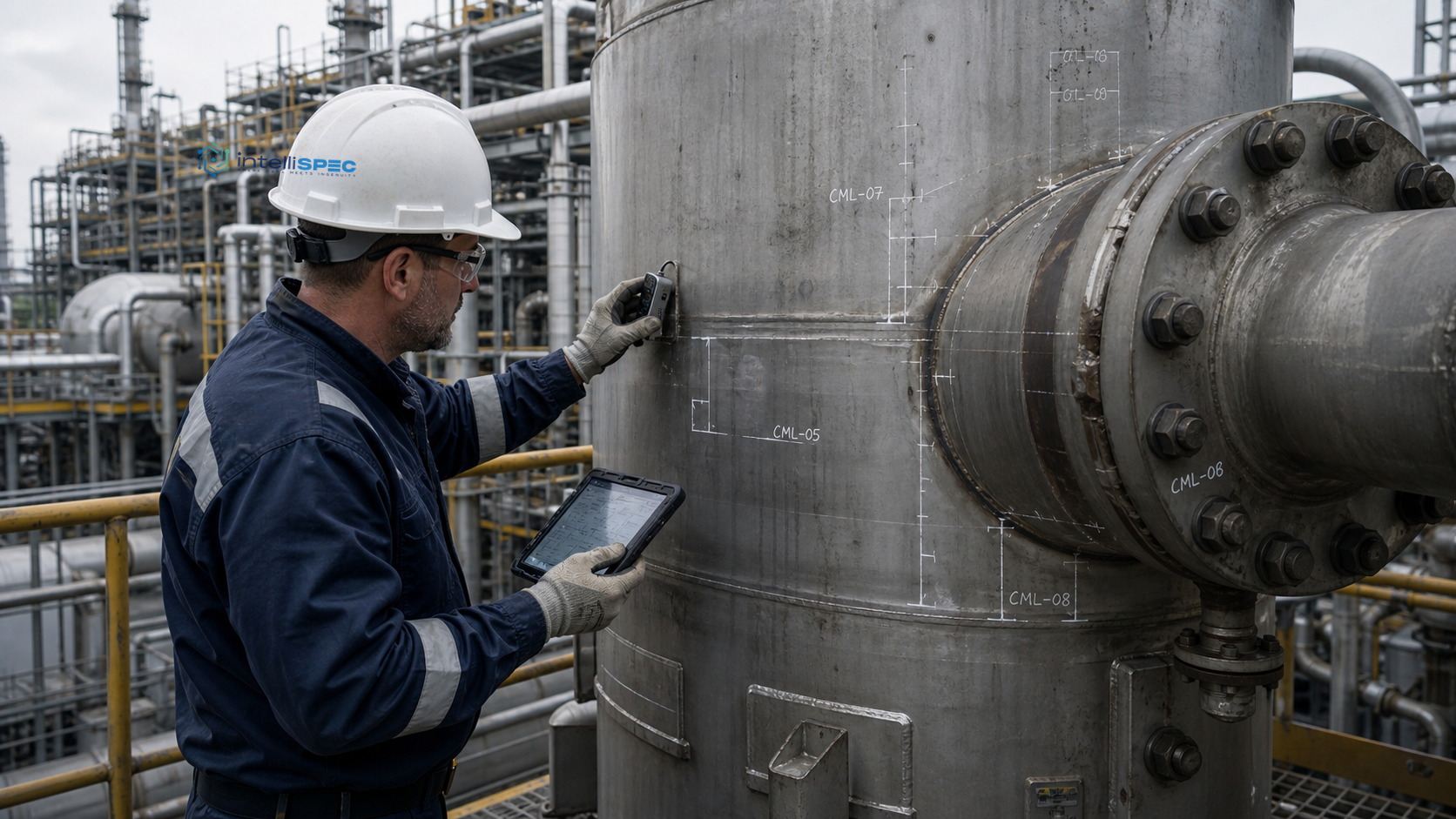
The outer wall
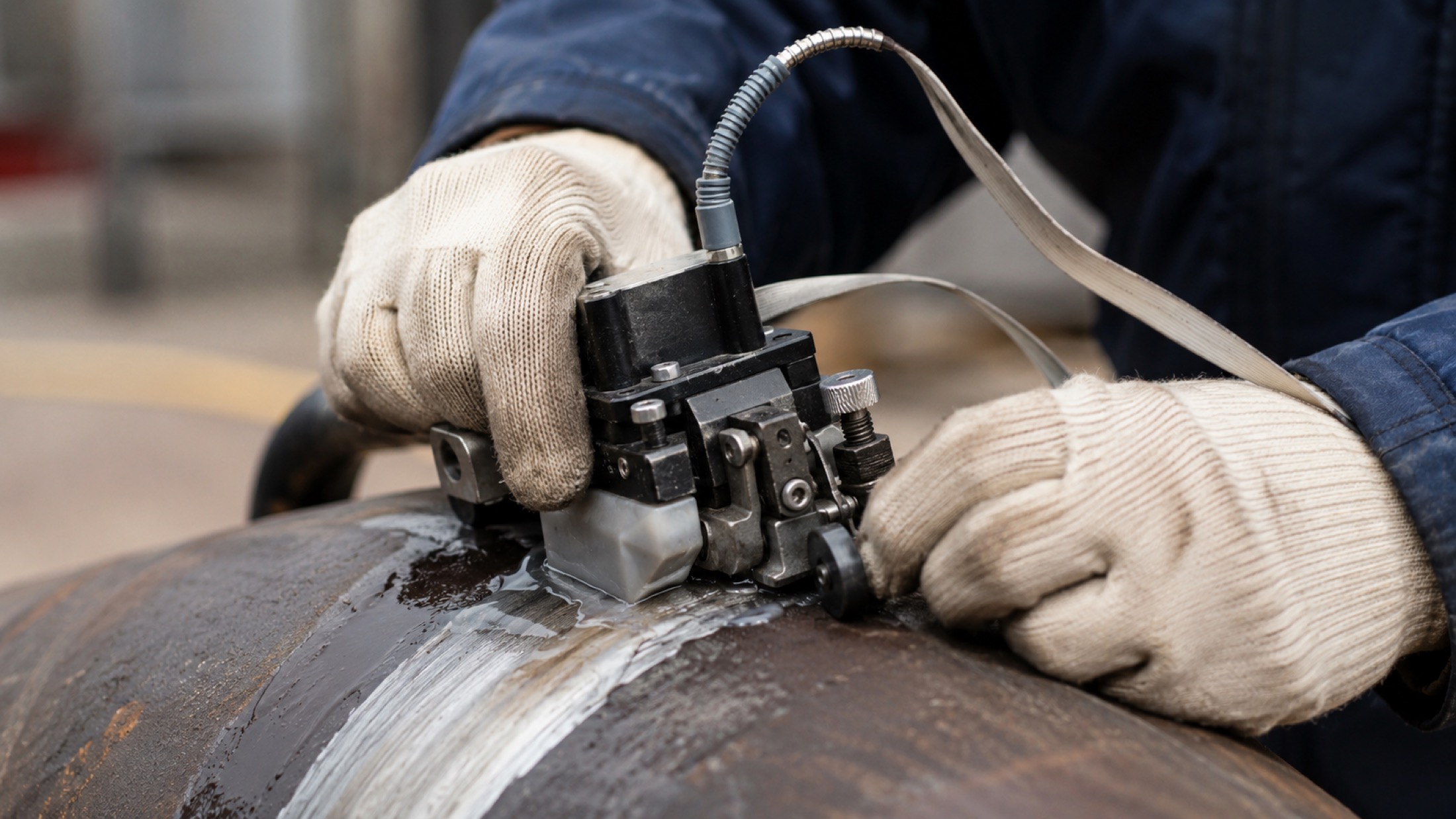
Where the UT probe and the encoded scanner read.
Wall, layer by layer
Every CML: short, long, and maximum corrosion rate.
The remaining wall
Minimum required thickness and remaining life, per ASME.
Capabilities
Short, long, and maximum rates on one engine, so every analyst reaches the same number.
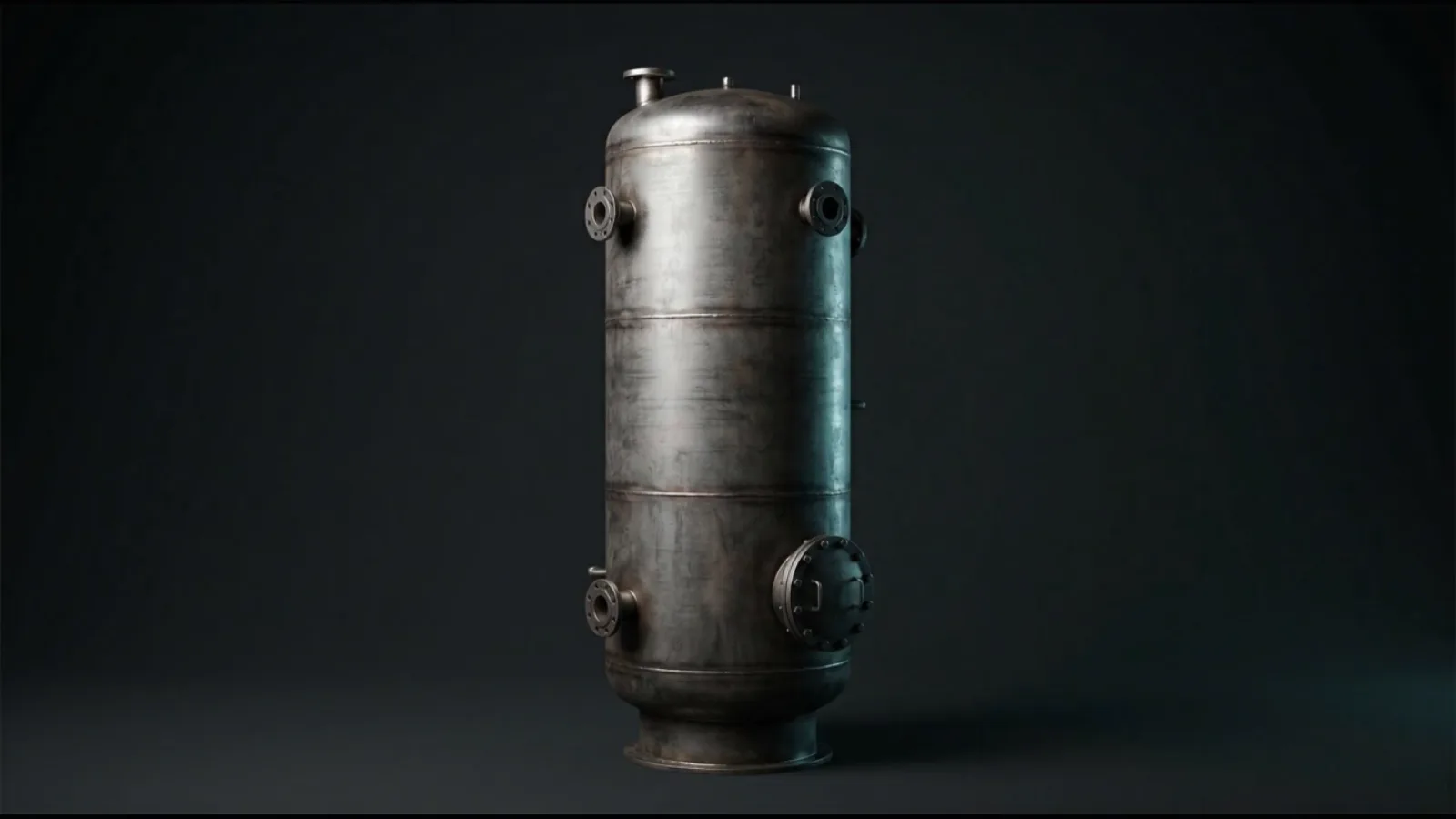
Minimum wall to ASME B31.3 or VIII Div 1, then the years left before it runs out.
The threshold date per circuit, with the critical band flagged for review today.
Spectra drafts circuits and CML points from the drawing, for an engineer to approve.
UT, PAUT, TOFD, RT, MT, PT, and ET land on the same CML, one timeline not seven.
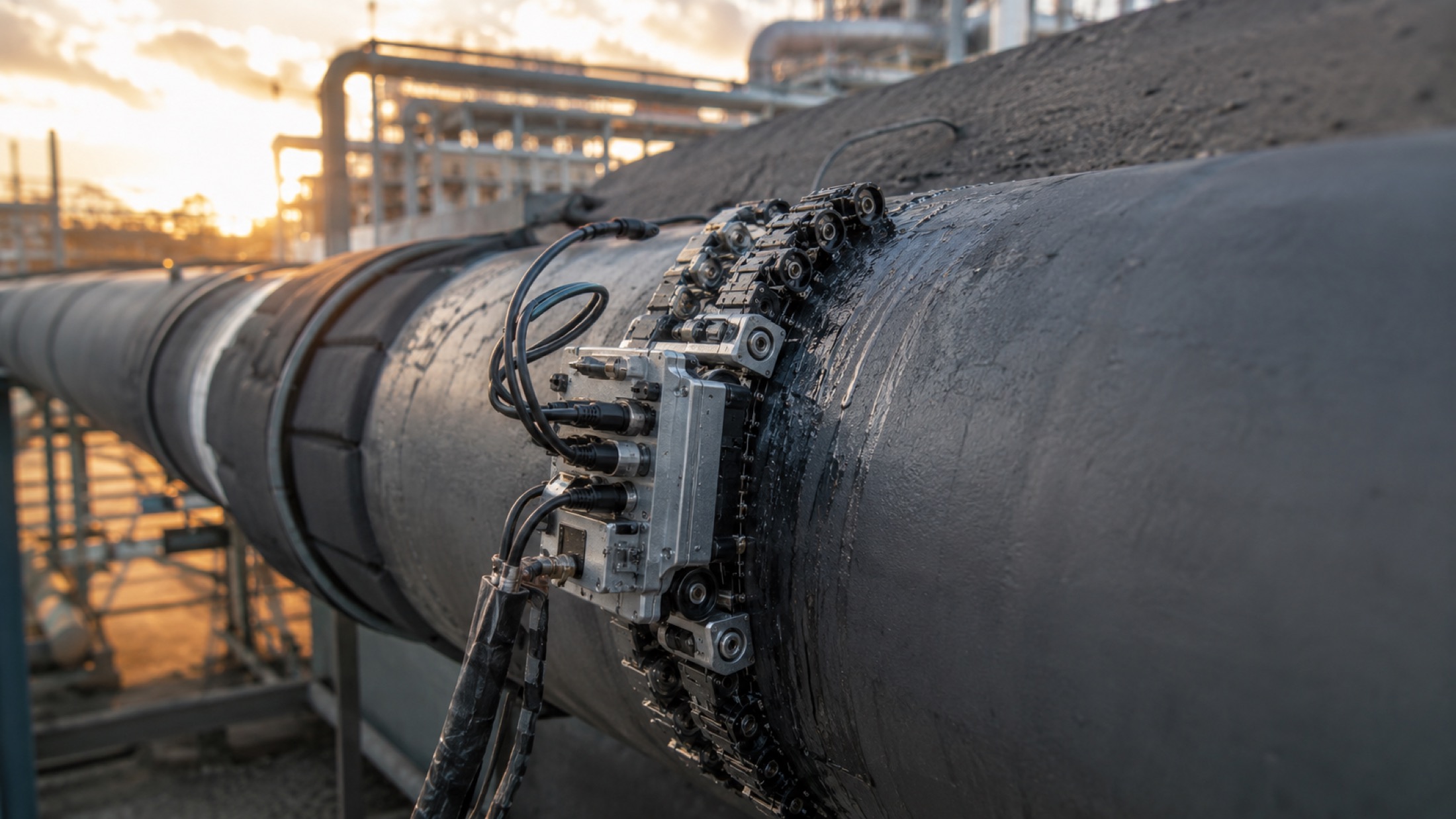
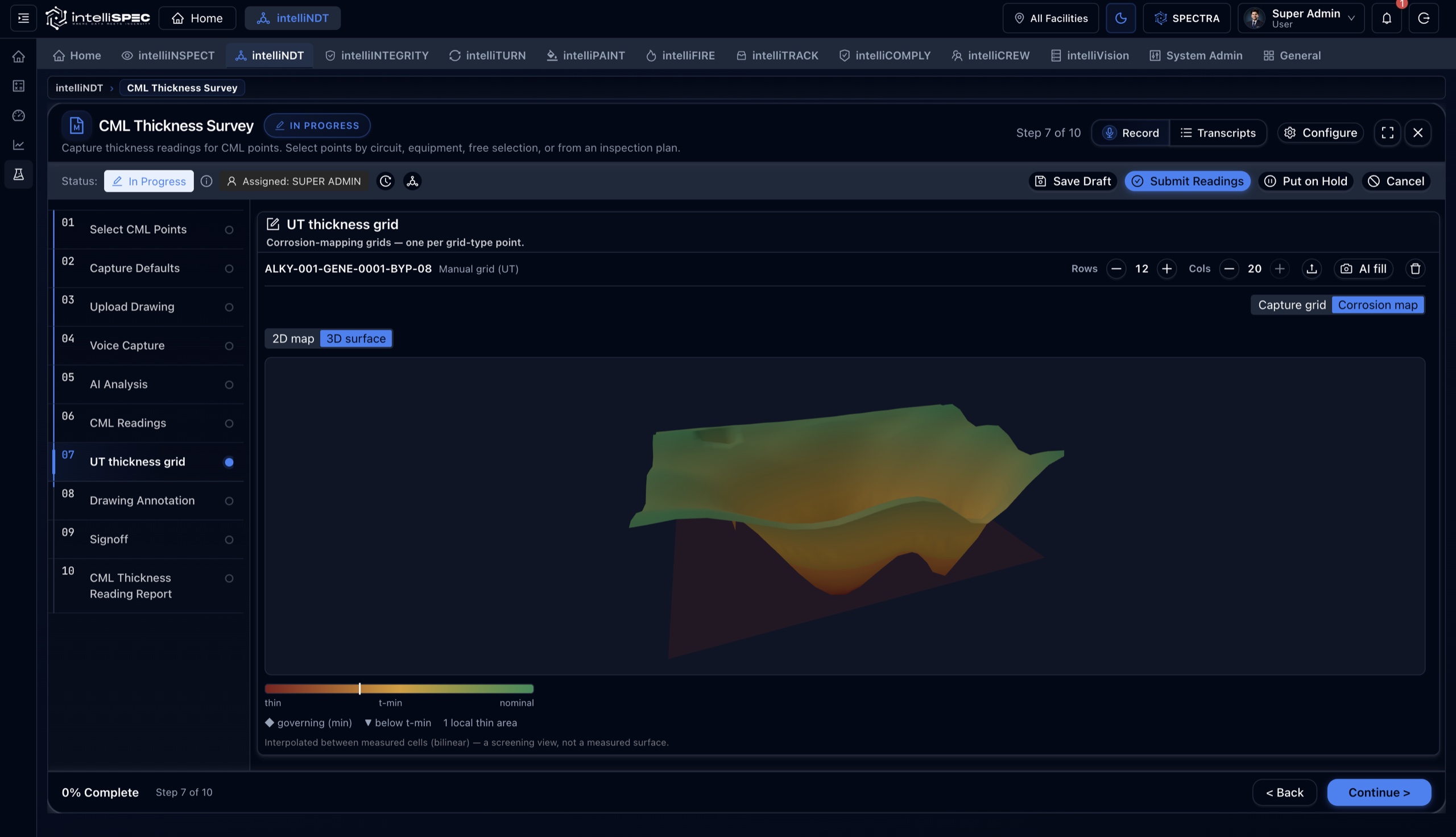
Automated corrosion maps import native, so coverage is the component, not a few points.
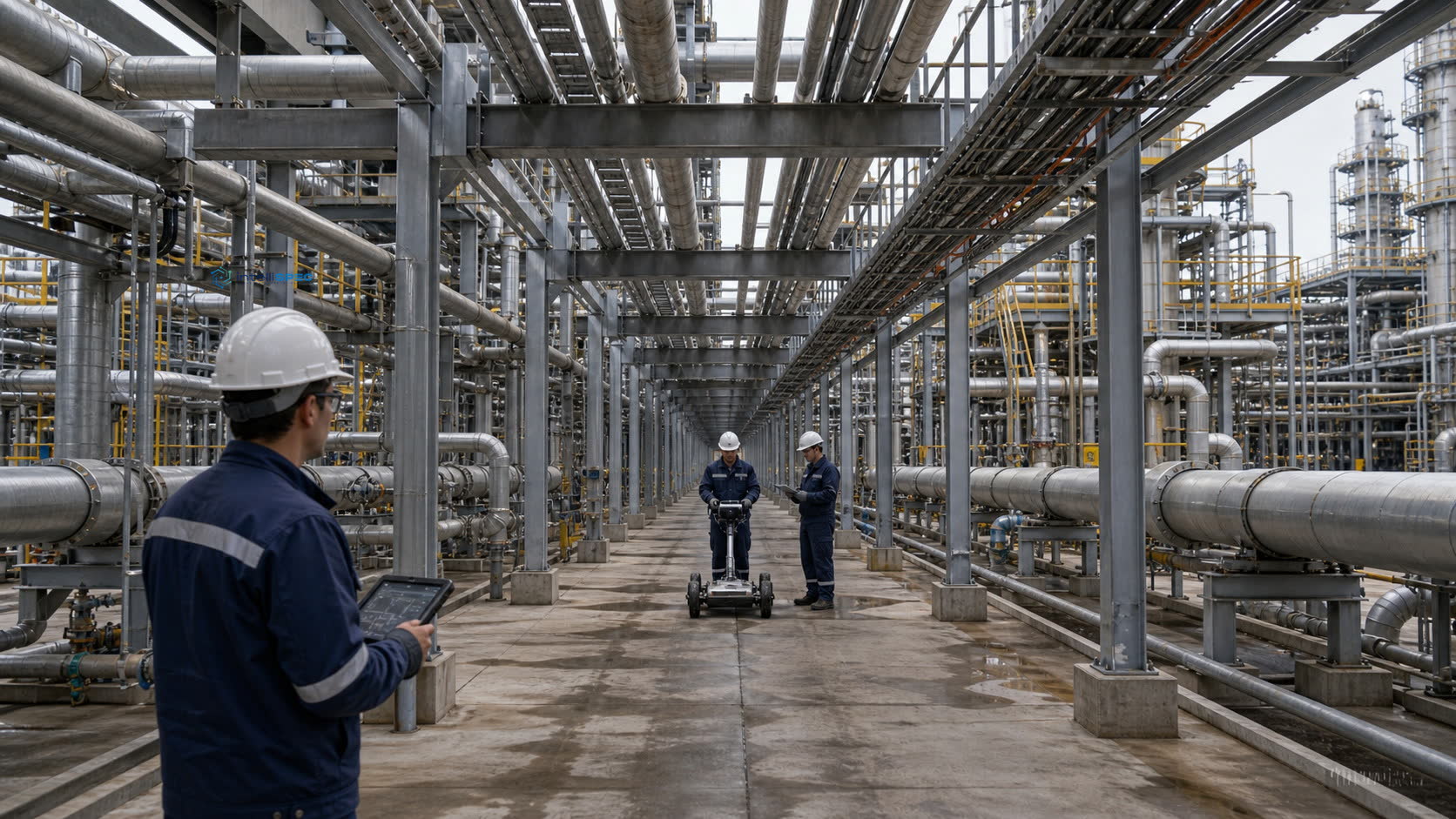
Permanent sensors and automated scanners stream in and reconcile to the CML on one engine.
Vision assist flags indications on imported scans for the analyst to confirm, never auto-called.
Grounded by design
For the NDE analyst
Short, long, and maximum corrosion rate on one engine, so every analyst agrees.
Encoded scans import native, so coverage is the whole component, not a few CMLs.
Minimum wall and remaining life flow straight to the risk score, per ASME.
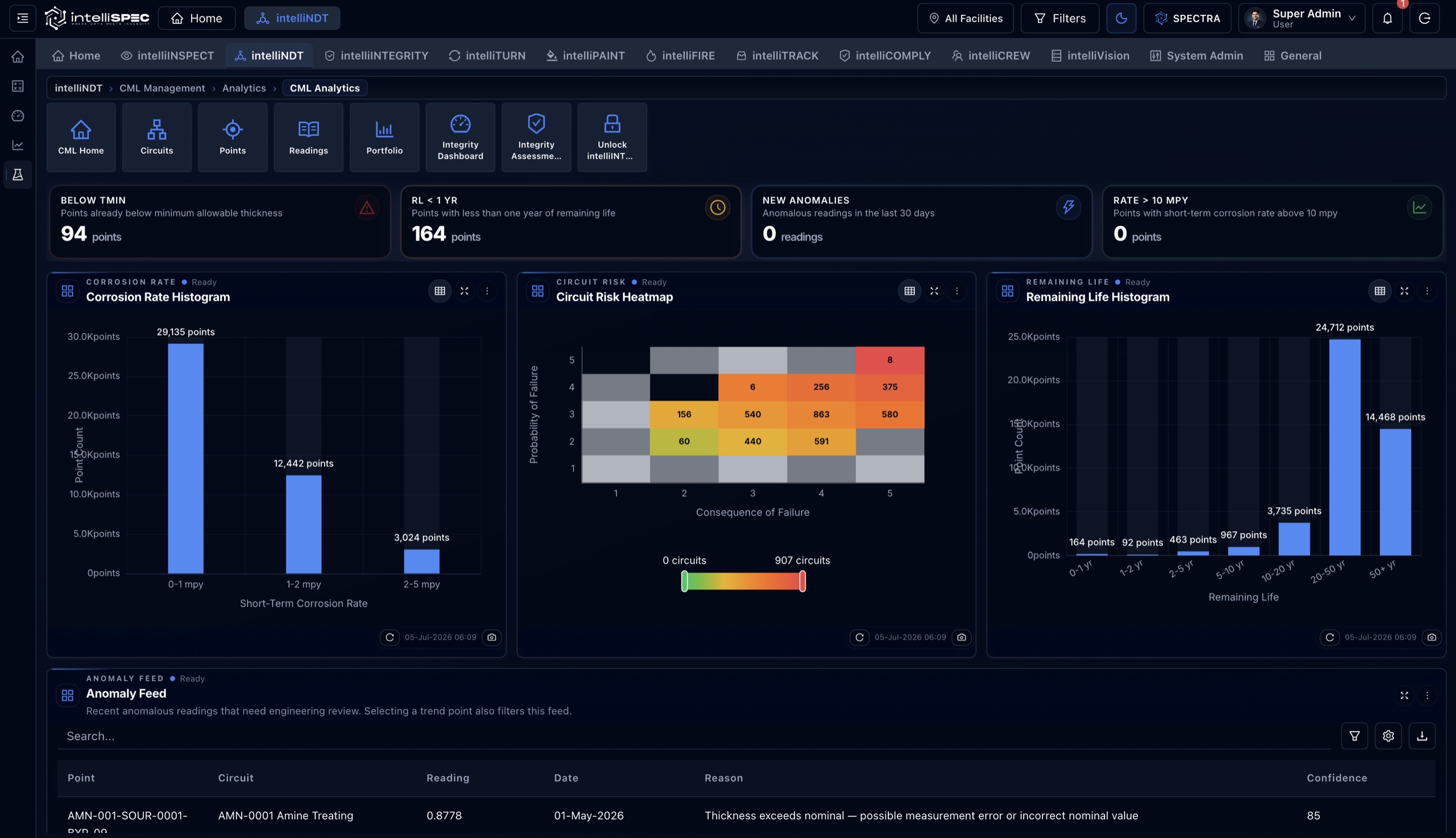
Real screens from the platform, not mockups
Proof
Explore
Know what can keep running and what cannot, the moment readings land: RBI and fitness-for-service to API 579.
Explore→
Inspections come back complete and consistent the first time, on any vessel, tank, exchanger, PRV, or line.
Explore→
Every module reads the same living model of your plant: hierarchy, 3D, photogrammetry, LiDAR. No one works from a stale drawing again.
Explore→Answers
UT straight-beam and thickness, PAUT, TOFD, RT including digital and computed radiography, MT, PT, and ET, plus screening methods like guided-wave UT and pulsed eddy current. Every method attaches to the same CML and asset record.
No. intelliNDT is the data-and-compute layer, not the instrument. The encoded scanners, crawlers, and permanent sensors you already run stream their readings in, and the module reconciles them to the CML on one engine. Manual readings and streamed data sit side by side.
The CML Corrosion Rate Calculator computes short-term, long-term, and maximum corrosion rates per point using API 510 and API 570 methodology, with scope selectable at the point, circuit, asset group, or program level.
The CML tMin Calculator applies ASME B31.3 for piping circuits or ASME VIII Div 1 for pressure vessels, drawing on the configured design basis for each CML point to produce a code-grounded minimum thickness value.
Yes. The CML Thickness Survey wizard supports offline sync, readings queue locally and push to the server on reconnect, keeping field work uninterrupted when signal is unavailable.
It drafts equipment references, corrosion circuits with component type, service fluid, operating conditions, and damage mechanisms, plus CML point locations for engineer review. Nothing writes to the program until the engineer approves the reviewed rows.
The CML Anomaly Detection calculator runs physical checks (impossible wall growth, non-physical values) and statistical checks (extreme rate outliers relative to point history) on every reading before it can be approved into the integrity dataset.
Both directions. A visual finding in intelliINSPECT can call up an NDE survey here, and approved CML readings flow on to intelliINTEGRITY, where they trigger assessments and update the RBI loop without export or re-keying.
See the failure before it happens. Prove the work after it is done.
Your asset class, configured live. No slides.