
Why intelliSPEC
Your inspection data deserves better than a spreadsheet.
Good integrity programs outgrow workbooks, scanned PDFs, and disconnected point tools. Here is how intelliSPEC compares, on the dimensions that decide whether you pass the audit.
Honest framingWe name the workflow, not a vendor. The columns below describe common patterns: spreadsheets with disconnected point tools, and inspection bolted onto a general asset system. Your setup may differ.
Side by side
Six dimensions that decide the audit.
Compared on real, defensible capability, not feature counts. One column meets all six.
The AI difference
A bolt-on copilot can't name a single asset you own.
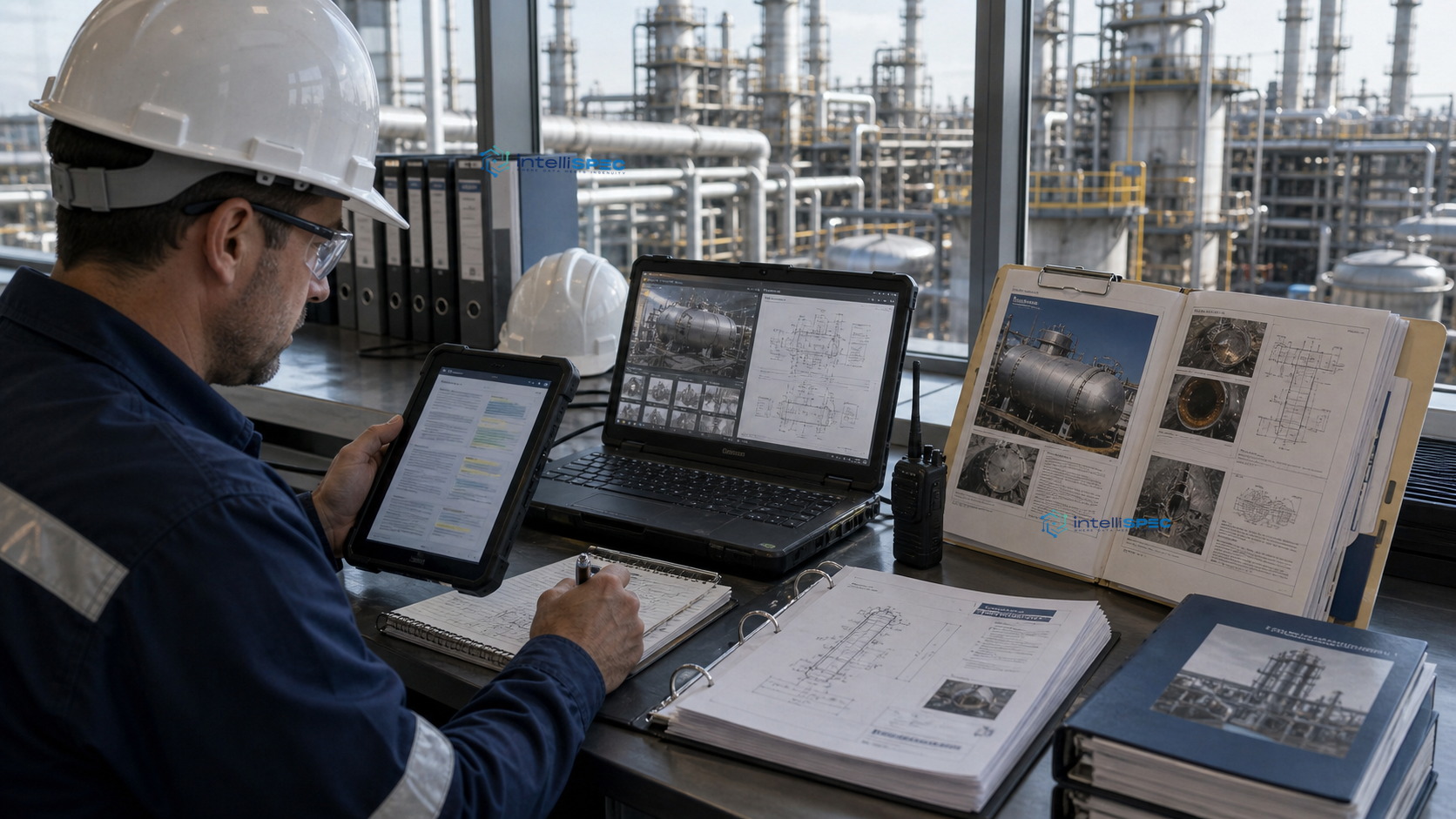
Generic copilots are trained on the public internet. In mechanical integrity, a confident guess is a liability. intelliSPEC is grounded the other way around: it reads your data model and cites the document, page and paragraph behind every answer.
- Reads your live digital twin, not the public internet
- Cites the document, page and paragraph behind every answer
- Never invents an asset, a reading, or a number
What changes
The difference is one record, computed against the code.
Not a prettier spreadsheet. A platform where capture, decision and proof are the same thread, built for the people doing the work in the field.
One record, every discipline
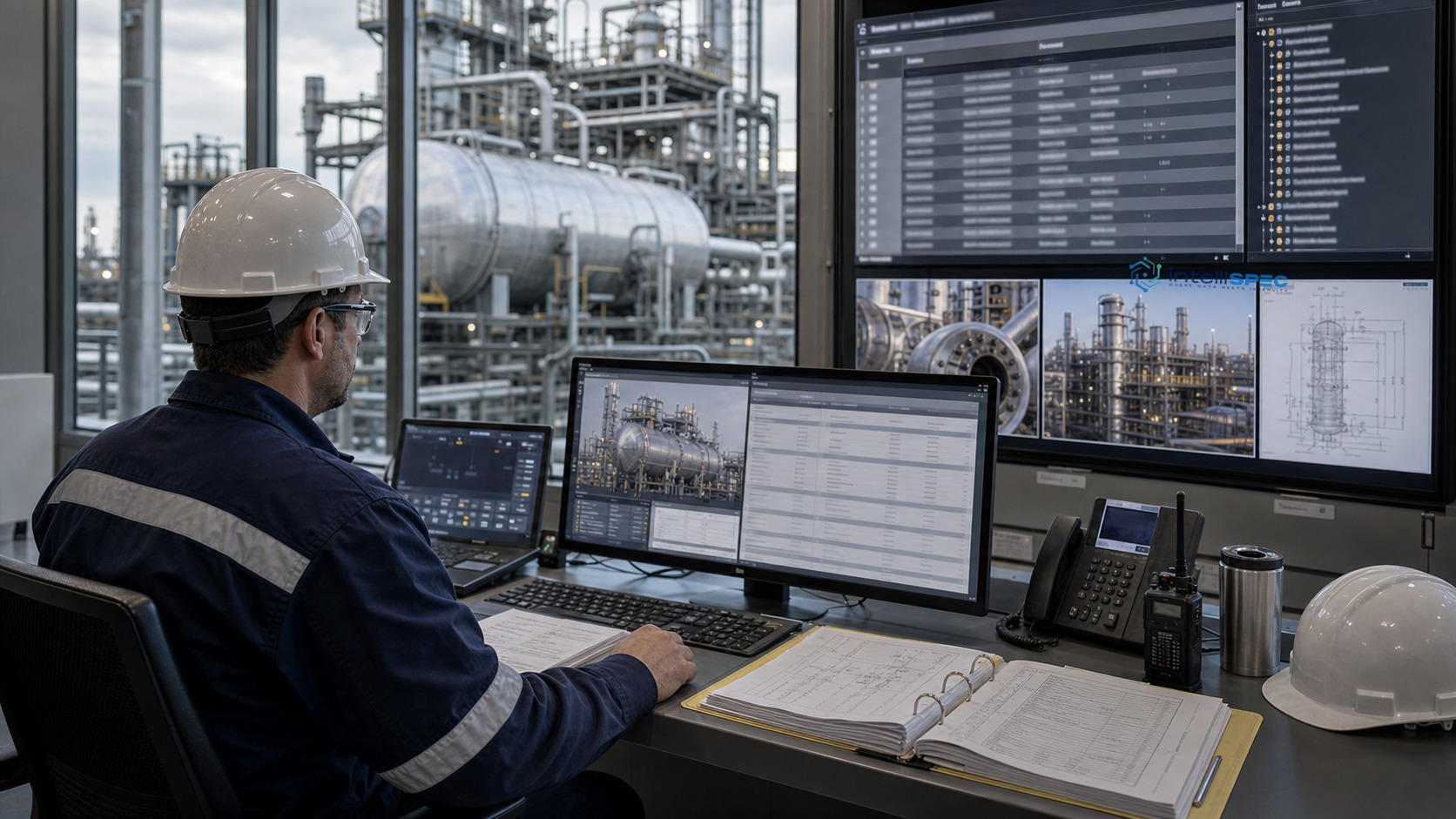
Inspection, NDE, integrity, coatings, fire and compliance write to the same digital twin. The history is assembled as you go, not chased afterward.
The standard is in the software
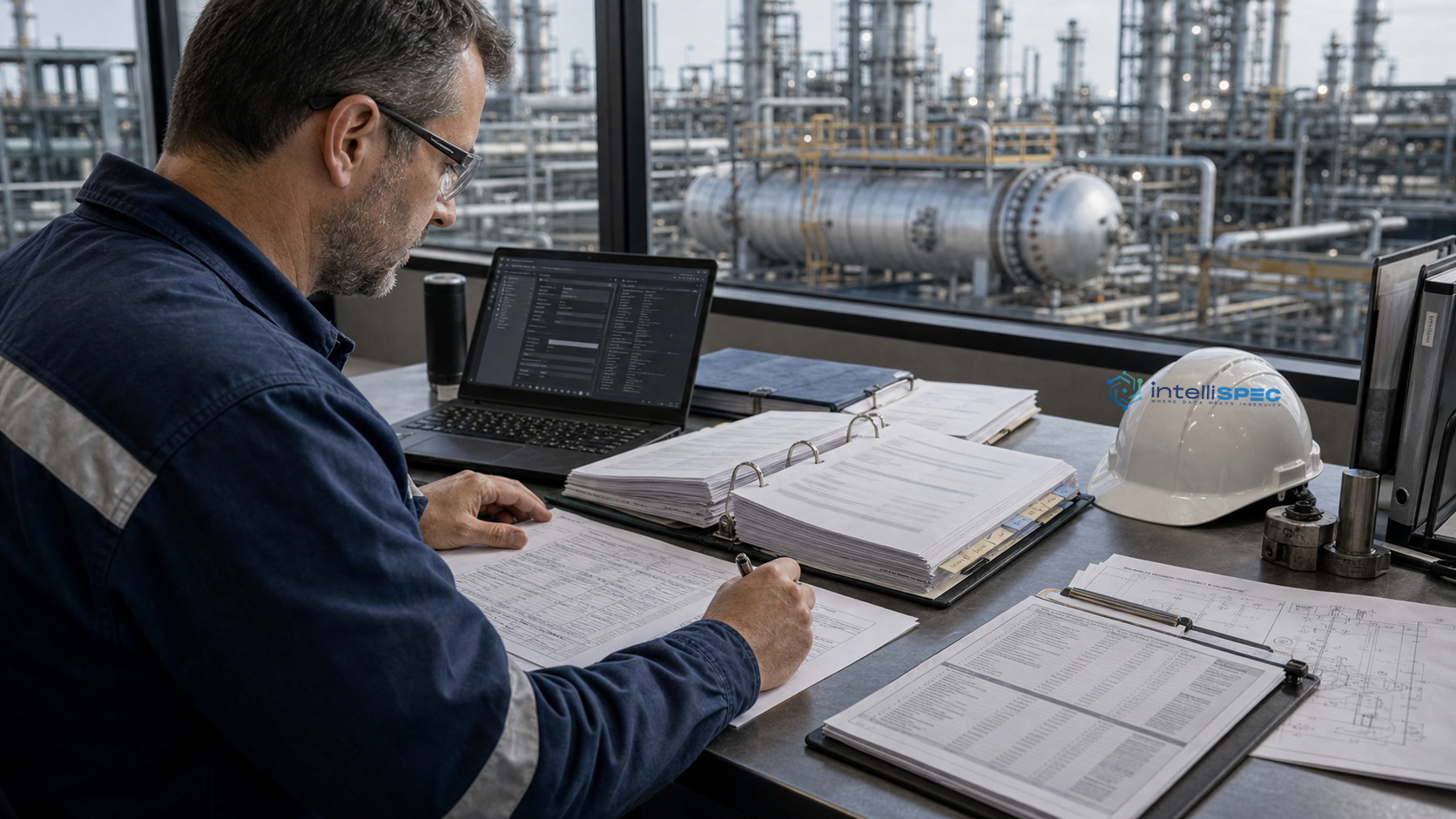
RBI to API 580 / 581 and fitness-for-service to API 579 are computed in the platform, against the code, so the verdict moves with the readings.

Built for where the asset is
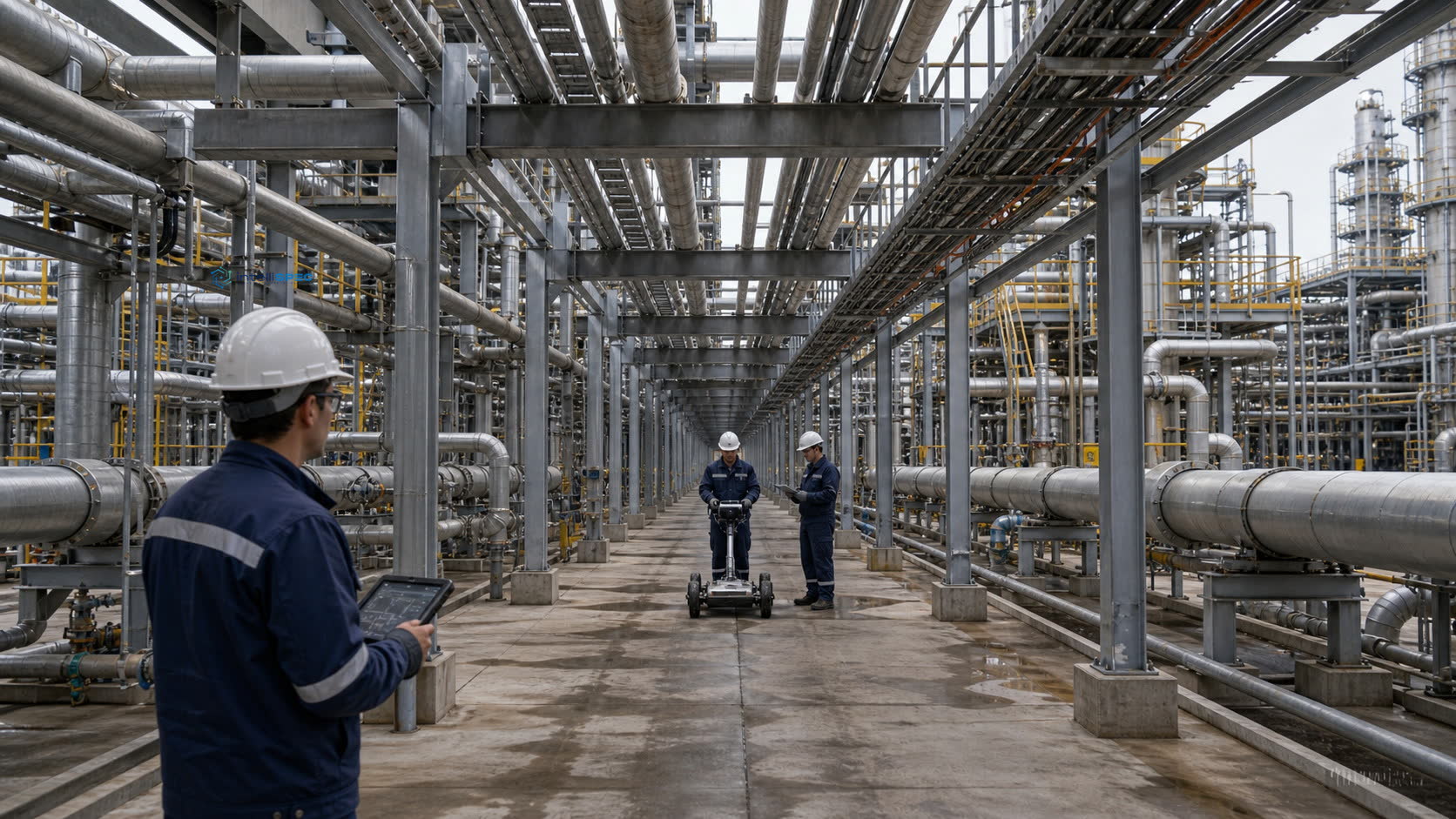
Offline-first means the field step and the system step are the same step. No paper round-trip, no re-keying, no lag baked into the process.
You keep your history. You lose the version problem.
AI-assisted import lifts decades of readings out of spreadsheets and scanned PDFs into one defensible record. The data comes with you; the drift does not.
Answers
The comparison, in plain terms.
Is intelliSPEC a replacement for spreadsheets?
Yes. intelliSPEC gives you one asset record that every discipline reads and writes, instead of workbooks and scanned PDFs that drift apart. AI-assisted import lifts your existing history out of spreadsheets and PDFs into one defensible record, so you keep the data and lose the version problem.
How is intelliSPEC different from a legacy EAM or asset system?
A general asset or work-order system is broad but shallow on inspection. intelliSPEC is the inspection and mechanical-integrity layer: asset-aware capture, code-aware RBI and fitness-for-service, offline field work, and an audit trail by default. It is built for the practitioner in the field, not only the planner at a desk.
Why does single source of truth matter for inspection data?
When readings, corrosion rates, RBI and reports live in separate files and tools, keeping them in step takes real effort. One record means risk and remaining-life update the moment a reading lands, and the evidence is always assembled the same way.
Can intelliSPEC handle code-aware RBI and fitness-for-service?
Yes. Risk-based inspection follows API 580 and 581, and fitness-for-service follows API 579 / ASME FFS-1, computed inside the platform rather than in a separate side calculation. Risk updates as readings change, so the verdict reflects the current condition.
Does it really work offline in the field?
Yes. intelliSPEC is offline-first by architecture: full capability on the device at the asset, signal or not. Records are captured and signed in the field and sync the moment the device reconnects, so there is no paper step and no re-keying.
How long does it take to go live compared to a big platform rollout?
intelliSPEC is configured to your asset class in days, not a multi-quarter rollout. Because it is metadata-driven, your team can add a field, a damage mechanism, or a workflow without waiting on an engineering ticket.
See it on your own asset class, not a slide.
See the failure before it happens. Prove the work after it is done.