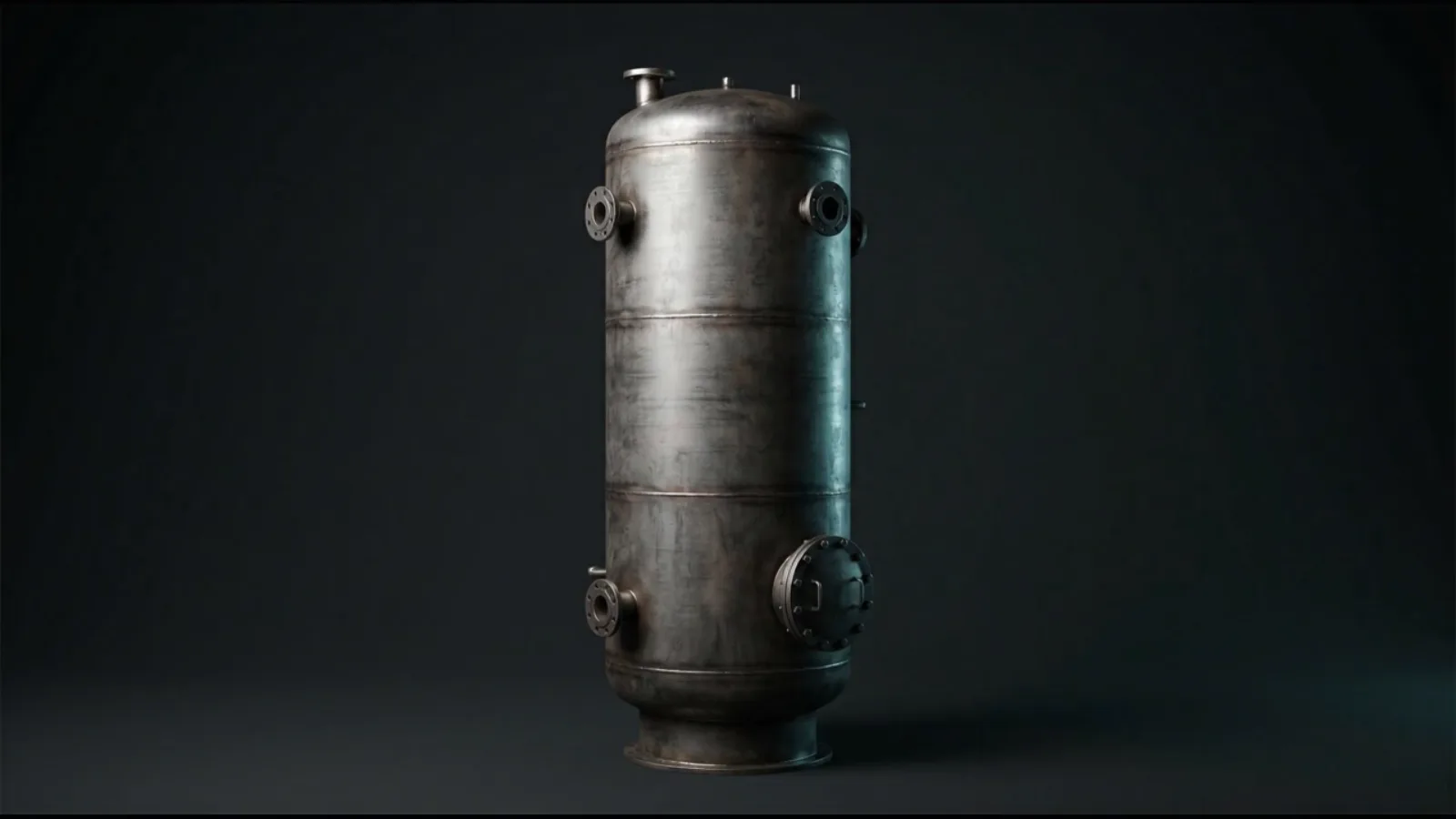
Storage tanks
API 653: storage tank inspection, explained
API 653 is the American Petroleum Institute's standard for the inspection, repair, alteration and reconstruction of welded aboveground storage tanks after they enter service, principally tanks built to API 650 or its predecessor API 12C. It governs the tank bottom, shell, roof, foundation and appurtenances, and it sets the rules for when a tank has to come out of service for an internal inspection. It does not cover new tank construction, pressure vessels, or underground storage.
What the standard requires
Shell evaluation
Shell courses are evaluated against a minimum thickness derived from the API 653 shell formula using the product height, specific gravity, joint efficiency and allowable stress, and against the corrosion rate measured at each CML.
Bottom evaluation
The tank bottom is assessed for both product-side and soil-side corrosion, with a minimum remaining bottom thickness set by the presence of leak detection and release prevention barriers. Bottom corrosion rate drives the internal inspection interval.
Inspection intervals
External inspections run on a fixed cycle, ultrasonic shell thickness intervals follow the shell corrosion rate, and internal intervals are set from the bottom corrosion rate and remaining life up to the maximum the standard sets, with RBI as an allowed alternative.
Settlement and foundation
Settlement surveys measure uniform, planar tilt and out-of-plane shell settlement and compare them to the standard's allowable limits, because differential settlement can overstress the shell and bottom well before thickness becomes a problem.
Repairs and alterations
Repairs, alterations and reconstruction follow the standard's rules for material, welding, weld spacing, hydrostatic testing and examination, and each one is documented with the authorization and the inspector's acceptance.
Inspector qualification and records
An authorized tank inspector under API 653 certification accepts the inspection. The owner-operator maintains the construction data, inspection history, thickness and settlement data, repairs and current evaluation for the life of the tank.
What the record must carry
- Tank identification, construction standard, product, specific gravity and design fill height
- Shell course thickness readings by CML with date, method and gauge
- Minimum shell thickness per course with the API 653 formula and inputs
- Bottom thickness data, corrosion rate and minimum remaining bottom thickness basis
- Settlement survey points and comparison against allowable limits
- Remaining life and next external, UT and internal inspection dates
- Repairs and alterations with material, welding and test records
- Authorized inspector name, certification and acceptance signature
How intelliSPEC handles it
intelliINTEGRITY routes tank tMin to API 653 and returns the formula and the design code beside the number, and the corrosion summary keeps short-term, long-term and maximum rate with the maximum governing so the remaining life and internal interval rest on the same basis every time. Bottom and shell CML points carry 64 fields each, so product-side versus soil-side readings, the gauge and the technician stay with the value. Repairs and settlement surveys are captured in intelliINSPECT with the signature widget's per-signer identity and a hash-chained audit trail behind every change.
Answers
API 653 questions
How often does API 653 require an internal tank inspection?
The internal interval is set by the bottom corrosion rate and the remaining life of the bottom, up to the maximum the standard sets. If the corrosion rate is not known, the standard sets a shorter default. An RBI assessment can justify a different interval when it is documented and reviewed.
How is minimum shell thickness calculated under API 653?
Each shell course has a minimum thickness from the standard's shell formula, which uses the fill height above the course, product specific gravity, joint efficiency and the allowable stress for the material. The result is compared to the measured thickness at the corroded location to set remaining life and, where needed, a reduced fill height.
What does API 653 say about tank settlement?
Settlement is measured around the shell circumference and compared to the standard's limits for uniform settlement, planar tilt and out-of-plane settlement. Exceeding those limits calls for an engineering evaluation even when thickness readings look fine, because differential settlement drives shell and bottom stress.
Does API 653 cover tank repairs?
Yes. The standard sets the rules for shell and bottom repairs, patch plates, weld spacing, hot taps, alterations and reconstruction, including when hydrostatic testing is required. Each repair belongs in the permanent record with its material, welding and examination results.