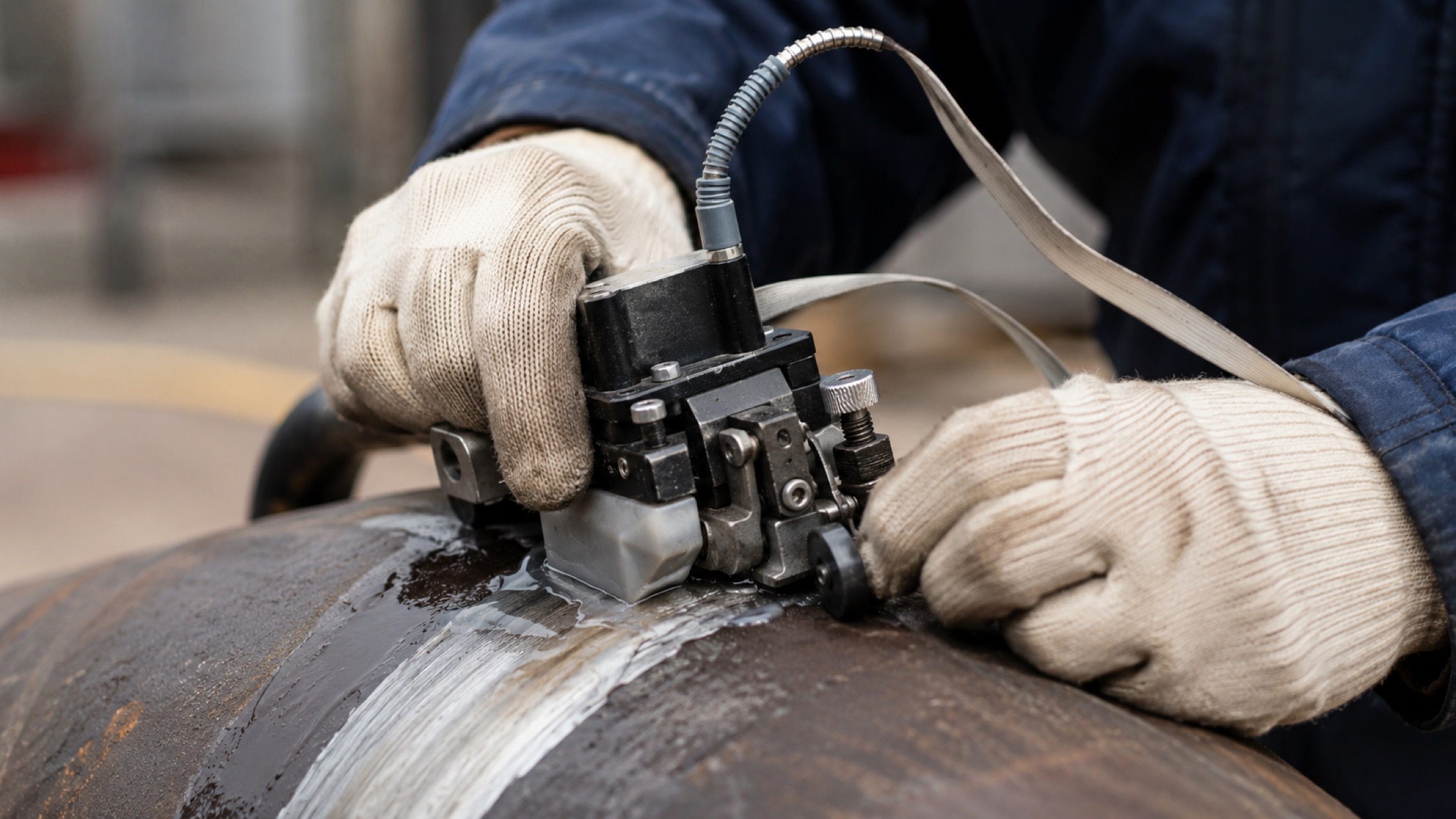
Hydroprocessing units (hydrotreaters, hydrocrackers, and catalytic reformers) operate at high hydrogen partial pressures and temperatures where High Temperature Hydrogen Attack (HTHA per API RP 941), wet H2S cracking (HIC/SOHIC), and stainless weld-overlay disbonding require advanced non-destructive examination (PAUT, TOFD, AUBT) and rigorous fitness-for-service tracking.
Current state before intelliSPEC
- Advanced NDE files disconnected from the vessel: Phased-array ultrasonic (PAUT) and time-of-flight diffraction (TOFD) encoded scan files sat on contractor hard drives, while only a two-page summary PDF entered the refinery's IDMS.
- Difficult flaw-growth comparisons: When a subsurface laminar indication or weld-toe crack was re-examined at the next turnaround, analysts had to hunt for the previous outage's setup file, transducer wedge details, and sizing table to prove whether the flaw had grown.
- Manual API 941 operating-envelope audits: Proving that every carbon and C-0.5Mo steel component had been screened against the latest API 941 Nelson curves required manual spreadsheet cross-references.
Configured path
The refinery configured intelliVISION, intelliNDT, intelliINTEGRITY, intelliCREW, and intelliTRACK.
- Weld-by-weld reactor and exchanger map: Every longitudinal seam, circumferential girth weld, nozzle-to-shell weld, internal attachment, and gasket groove was indexed in
. - Structured PAUT/TOFD and DICONDE archive:
stored encoded scan media, setup parameters, calibration blocks (from), and examiner ASNT/PCN Level II/III credentials (from) directly on the weld record. - API 581 and API 579 flaw tracking: Subsurface indications were logged with length, through-wall height, and depth below surface in
, linking multi-cycle sizing comparisons and engineer-verified fitness-for-service evaluations.
Measured outcome
- Cycle-to-cycle flaw repeatability: Advanced NDE crews open the exact prior scan parameters, datum points, and indication coordinates before placing the probe on the shell.
- Complete HTHA and wet H2S governance: Every susceptible circuit and vessel is mapped to its API 571 damage mechanism and API 941 inspection plan.
- Defensible run-or-repair engineering calls: Insurers and corporate chief inspectors review the raw NDE evidence, corrosion rates, and engineer sign-off in one place.