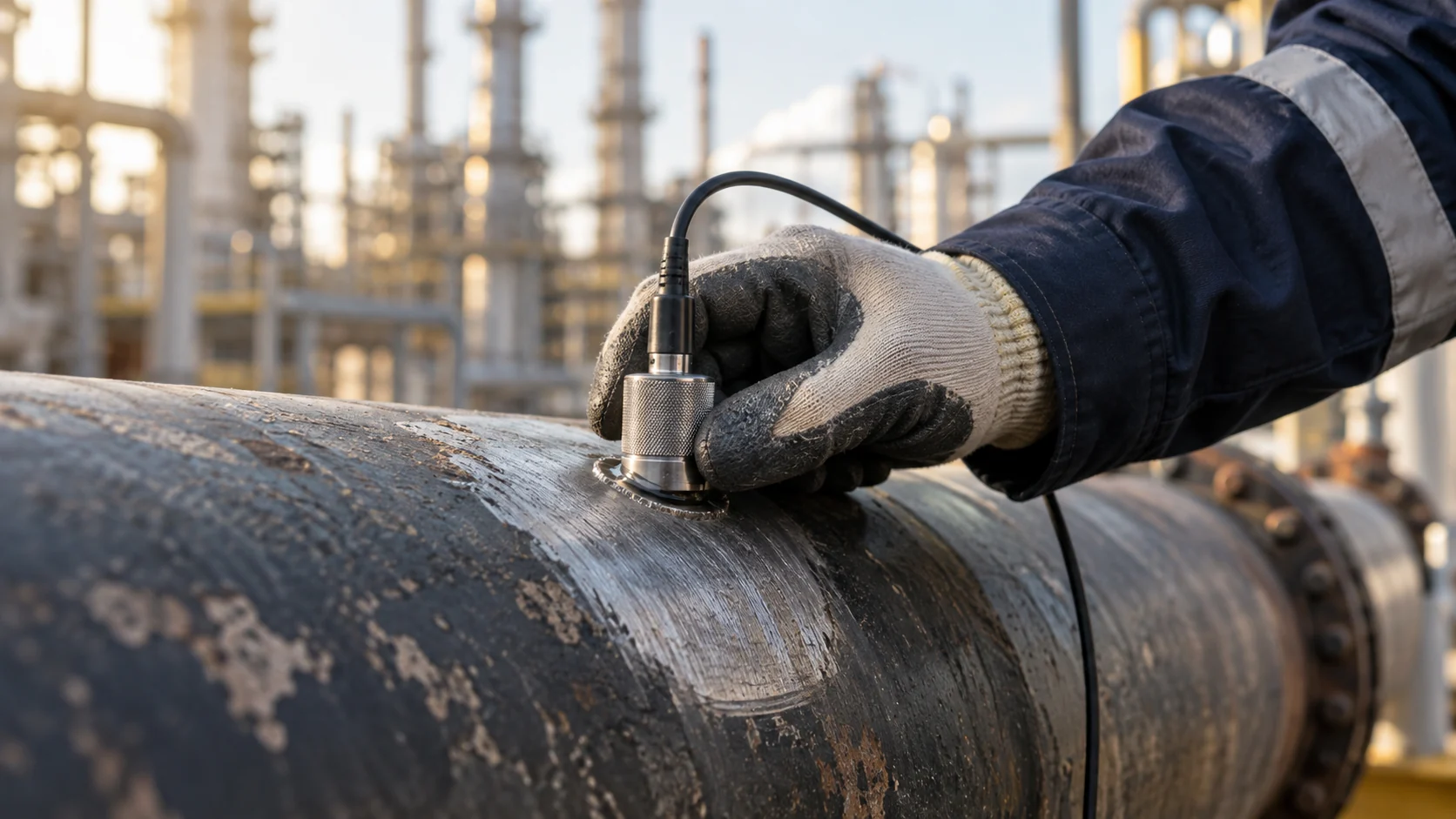
When an in-line inspection (ILI) smart-pig run flags metal-loss or dent anomalies on a gas or hazardous-liquid transmission pipeline, the operator must excavate the bellhole, verify the flaw in the ditch, calculate remaining strength under ASME B31G / Modified B31G, and decide whether to recoat and backfill, install a Type A or Type B sleeve, or cut out a cylinder, all while an excavation crew and heavy equipment wait on the right-of-way.
Current state before intelliSPEC
- Ditch-to-office delay: Field NDE technicians mapped corrosion river-bottom profiles and UT wall readings into a laptop spreadsheet in the truck, emailed it over spotty cell service to an integrity engineer in town, and waited hours for a sleeve decision.
- Disconnected TVC (traceable, verifiable, complete) records: Under PHMSA Mega Rule (49 CFR 192.624 / 195.452), soil-to-air CP potentials, coating condition, UT calibration, and repair weld NDE had to be manually stitched together after the dig closed.
- ILI unity-plot reconciliation lag: Comparing called ILI depth against field-measured depth across dozens of digs took months of spreadsheet cleanup.
Configured path
The operator deployed intelliVISION, intelliEDGE, intelliINSPECT, intelliNDT, intelliINTEGRITY, intelliPAINT, and intelliCOMPLY.
- Wheel-count and weld-joint register: Pipeline segments, girth welds, and ILI anomaly calls were loaded into
and checked out tobefore the crew mobilized to the right-of-way. - Offline pit-grid and ASME B31G calculation: Technicians logged pipe-to-soil potential, coating disbondment, and axial/circumferential corrosion grids in the ditch;
ran original and modified ASME B31G (1991 and 2012) safe-pressure and ERF calculations on the record, held provisional for the engineer's sign-off. - Repair and recoating closeout: Sleeve weld MT/UT results and
holiday and DFT checks were signed before backfill.
Measured outcome
- Faster bellhole closeout: Engineers review structured pit grids, photos, and provisional B31G results as soon as the tablet syncs, cutting open-ditch equipment standby time.
- PHMSA TVC compliance by default: Every dig package retains its GPS coordinates, examiner certs, gauge serials, B31G formula inputs, and engineer signature.
- Immediate ILI vendor feedback: Called-versus-found metal loss updates on the pipeline segment automatically.