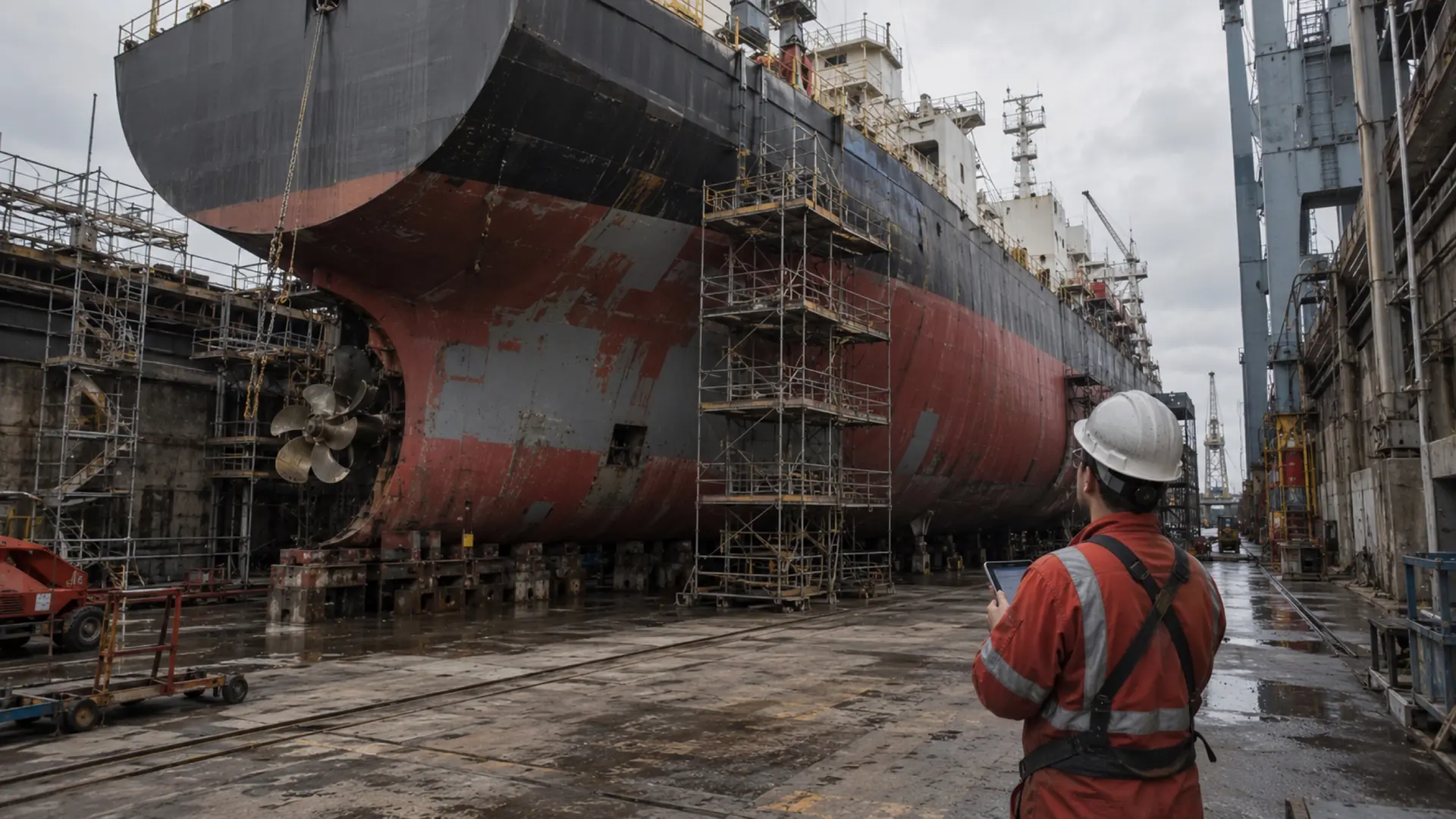
Preparing a vessel or offshore floating unit for a five-year classification special survey under IACS UR Z10, ABS, or DNV rules requires thousands of ultrasonic thickness measurements (UTM) across deck plates, transverse web frames, bulkheads, and water-ballast tanks, alongside coating condition grading and steel-renewal tracking in drydock.
Current state before intelliSPEC
- Confined-space transcription bottleneck: UTM technicians climbed out of dark, humid ballast tanks with chalked plate numbers and voice recorders, then spent nights typing readings into class spreadsheet templates.
- Late steel-renewal discovery: When diminution exceeded class allowable percentages, calculating the steel weight and routing the crop-and-renew scope to the shipyard caused dock-schedule extensions.
- Coating condition disputes: Ballast-tank coating breakdown (GOOD / FAIR / POOR per IMO PSPC) was documented in loose photo folders disconnected from the structural frame numbers.
Configured path
The fleet deployed intelliVISION, intelliEDGE, intelliINSPECT, intelliNDT, intelliPAINT, and intelliPROJECTS.
- Frame-and-strake asset hierarchy: Hull plates, longitudinal stiffeners, transverse frames, and ballast tanks were structured in
with original build thickness and class diminution thresholds. - Offline UTM inside ballast tanks: Gauging crews carried
into confined tanks with zero signal, streaming UT readings against the exact frame and strake and photographing IMO PSPC coating condition in place. - Drydock scope and gate tracking: Plates exceeding allowable diminution automatically flagged for steel renewal and flowed into the
docking specification and daily yard wall chart.
Measured outcome
- Same-day class surveyor review: Diminution summaries, close-up survey photos, and NDE technician credentials (ISO 9712 / PCN) were ready for the attending classification surveyor at the end of each shift.
- Controlled yard change orders: Steel-renewal locations and coating square footage were backed by plate-level UT and DFT records before shipyard work orders were approved.
- Persistent vessel twin: Survey history stays with the hull from special survey to intermediate survey across its service life.