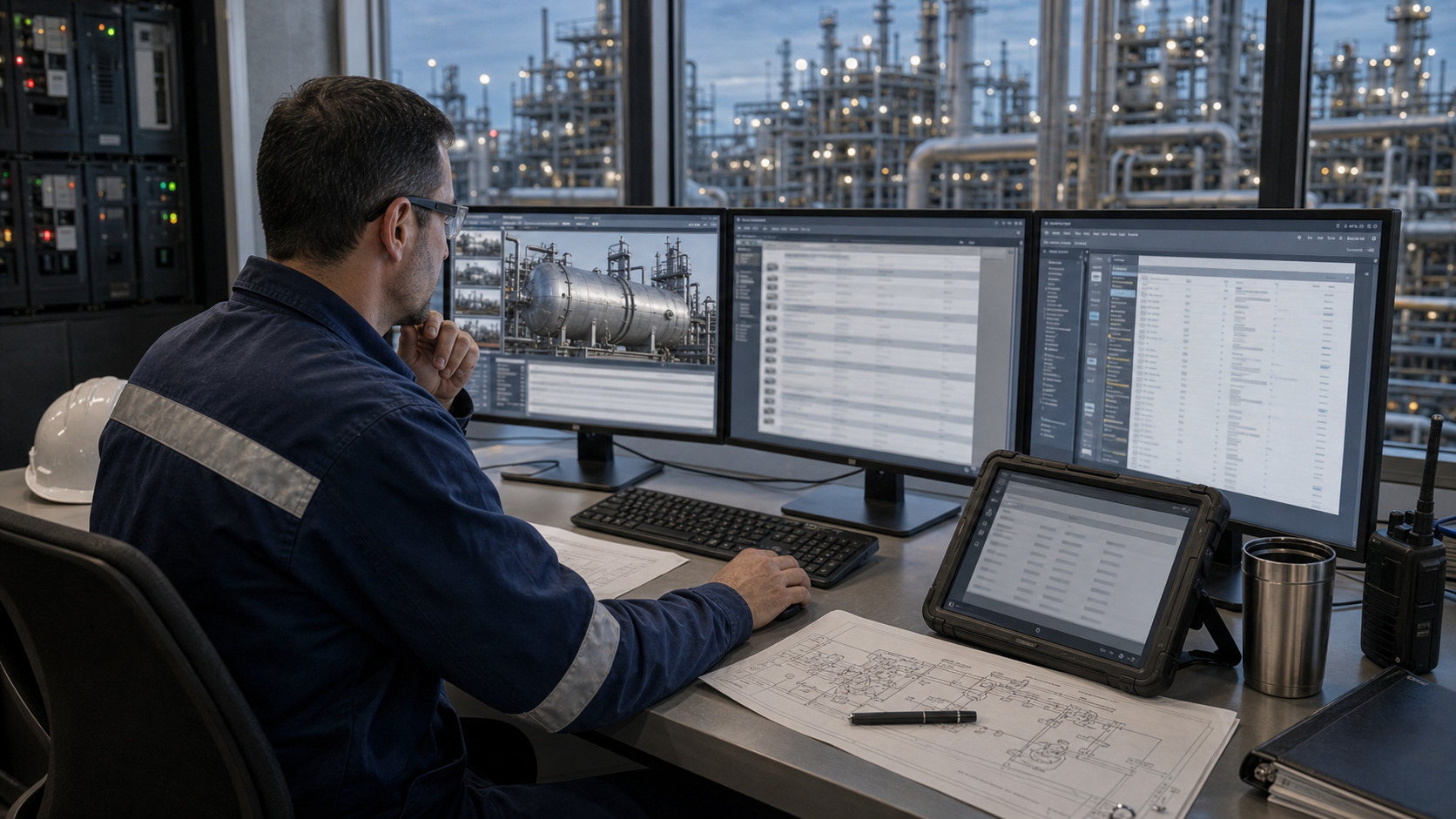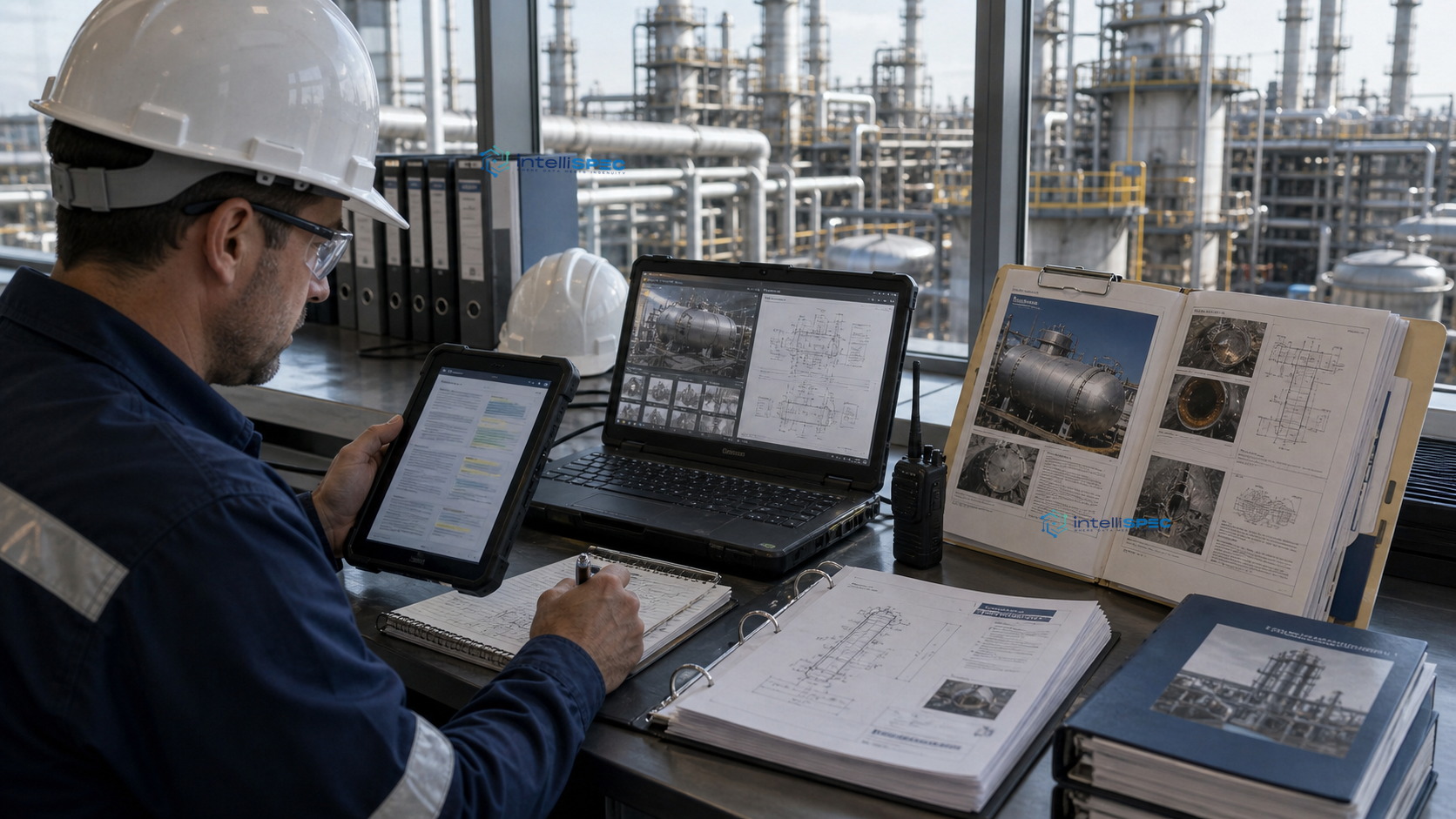
Watch a UT technician work a CML grid and count the hand movements. Couplant, probe placement, steady the probe, read the gauge, and now record the number, which means setting the probe down or trapping it under an arm, pulling off a glove, and pecking a value into a phone at the top of a ladder. Multiply by four hundred readings a shift. Every transition between the measurement and the record is time, and every one is a chance for the number to arrive wrong or land on the wrong row.
That transition is what voice capture removes. The technician keeps the probe coupled, keeps eyes on the gauge, and speaks: "location B7, 0.312." The record lands while the measurement is still live in front of them.
Where the gains actually come from
The obvious pitch is speed, and the speed is real. But the durable gains are in record quality.
- Transcription error drops. The classic field failure is not a bad measurement, it is a good measurement recorded against the wrong location, or a digit transposed between the gauge and the keyboard. Speaking the location and value together, while looking at both, collapses the gap where those errors live.
- Capture happens at capture time. Voice removes the strongest excuse for batching, "I'll enter these at the trailer." Batched entry is reconstruction, and reconstruction is where field data quality goes to die.
- Observations get richer. Technicians type in fragments because typing in gloves is miserable: "pitting nozzle N3." The same person speaking gives you a sentence with depth, extent, orientation, and a comparison to last year. The marginal cost of detail drops to zero, and detail is what the next inspector needs.
- Some environments allow nothing else. Fresh-air suits, confined-space entries, and elevated work make handheld entry somewhere between unsafe and impossible. Voice is not a convenience there, it is the only capture path that keeps records at the point of work.
The honest limits
Voice capture earns skepticism when it is done as raw dictation. A shift's audio memo is not a record, it is a transcription job deferred. For field use the bar is higher:
- Structured, not freeform. The system should parse "B7, 0.312" into the B7 field as a number, confirm it back, and flag values outside the expected range at the moment they can still be re-measured.
- Noise tolerance. A compressor deck is not a podcast studio. The interaction has to survive plant noise or fail loudly, never silently mis-hear.
- Correction on the spot. Misrecognition is inevitable; what matters is that the technician hears the confirmation and fixes it in two seconds, not that a reviewer finds it in two weeks.
- Review before sign-off. Voice fills the form. A human still reads the form before it becomes the record of note.
Treated that way, voice is not a gimmick bolted onto a form. It is an acknowledgment that the field's hands are occupied and that the best record is the one made while the work is happening.
Voice capture in intelliSPEC feeds structured forms directly, confirmed as it lands, offline like everything else, so the record assembles while hands stay on the work. Bring a CML grid to a demo and try a run hands-free.