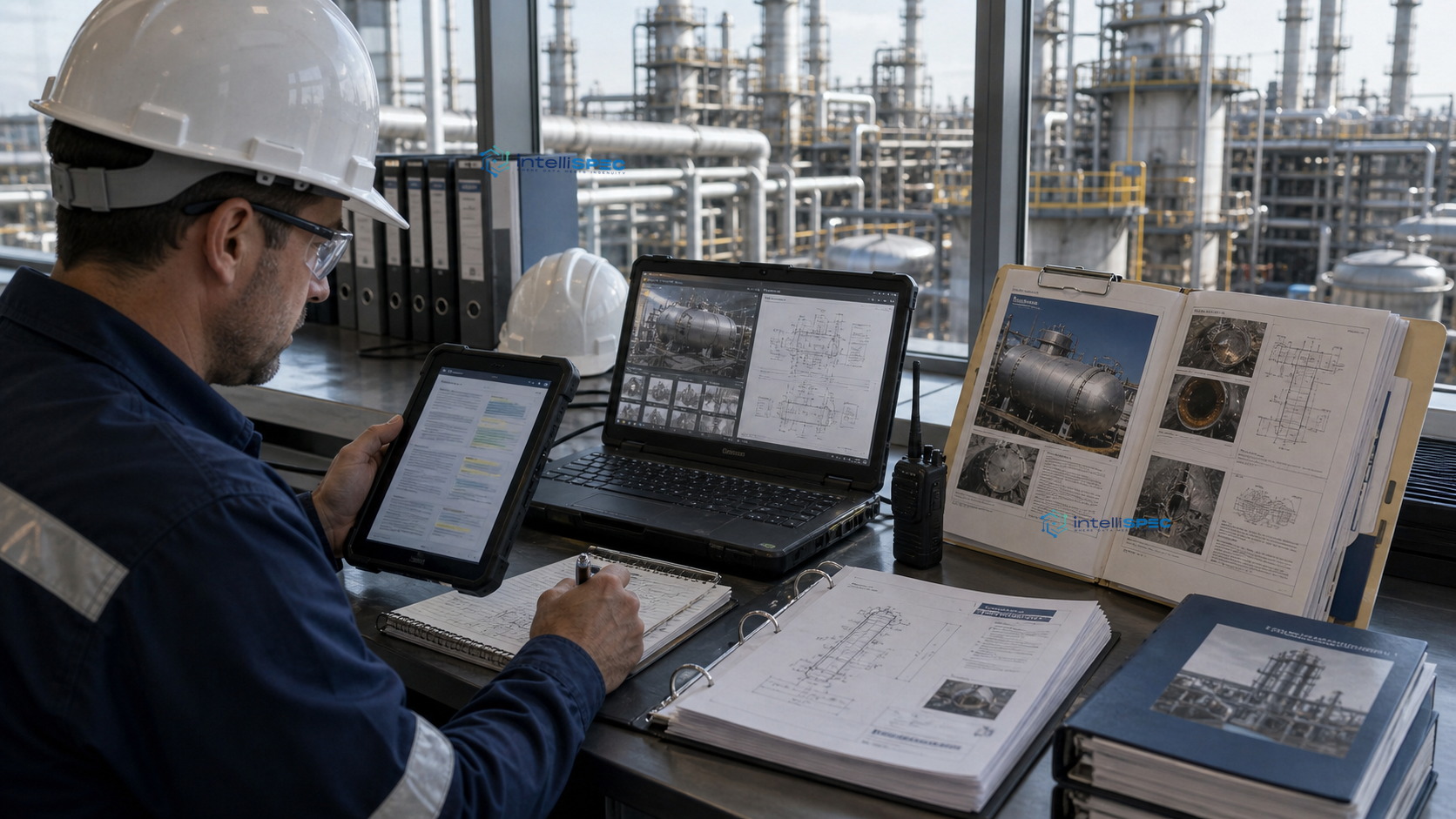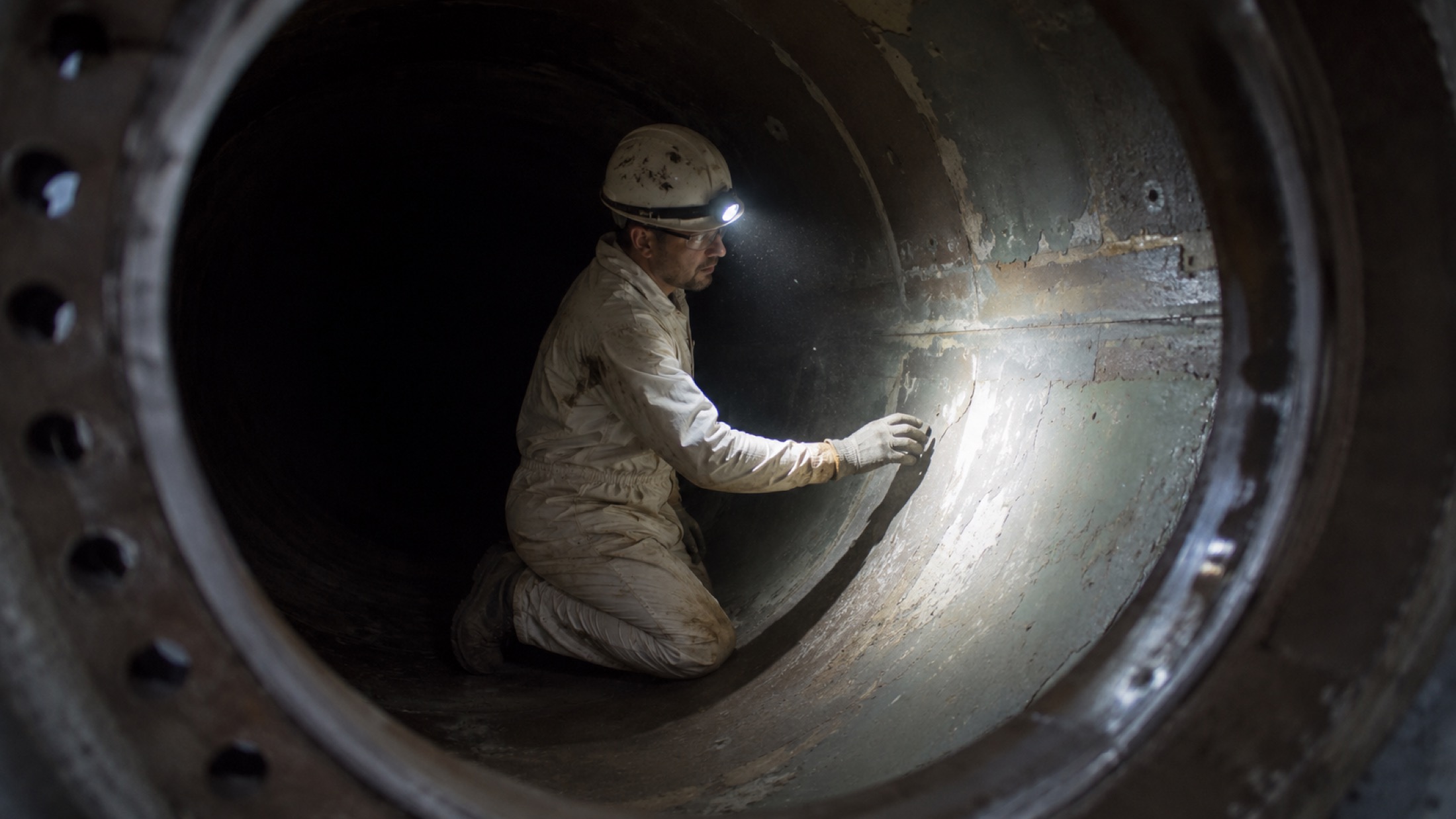
Every inspector's phone holds the same archaeology: hundreds of photos of corroded steel, unlabeled, undated in any way that matters, stripped of location the moment they were texted to a coordinator. Each one was taken to prove something. Almost none of them still can. A photo becomes evidence not because of what it shows but because of what can be established about it: what it depicts, where, when, by whom, and that it has not been altered since. Strip any of those and an auditor, a jurisdiction, or opposing counsel in a warranty dispute is entitled to discount it.
The four properties of an evidentiary photo
- Identity. The photo must be bound to a specific asset and location: this vessel, this nozzle, this CML, not "a nozzle." Filenames and folder trees do not survive; IMG_4471 in a folder named "TK-201 maybe" is the natural end state of manual filing. The binding has to happen at capture, by taking the photo from within the record it belongs to.
- Context. A tight shot of pitting is uninterpretable without scale and bearings. Field practice is a photo pair: a locating shot that shows where on the equipment you are, then the detail shot, with a scale reference, a ruler, a pit gauge, a marker, in frame. The next outage's inspector needs to find the same spot and judge whether it grew.
- Timestamp. The time that matters is capture time, not upload time, not the file modification date a copy operation rewrote. Messaging apps and email are timestamp shredders: they re-encode, strip metadata, and produce copies whose dates say nothing about the inspection.
- Custody. The quiet question an auditor asks: could this image have been edited, substituted, or reused from another job between capture and record? A photo that traveled through a group chat, a laptop desktop, and a PowerPoint has no answer. A photo captured directly into a system of record, with its metadata intact and its history logged, does.
The workflow that produces evidence
None of this requires exotic tooling. It requires the capture path to be the filing path.
- Open the inspection record first, then take the photo from inside it, so identity is structural rather than remembered.
- Shoot the pair: locate, then detail, with scale in the detail shot.
- Caption at capture, one sentence while the observation is in front of you. "Pitting to 2 mm, 4 o'clock position, downstream of weld" written on the spot beats anything reconstructed Friday.
- Never transport photos through channels that strip their metadata. If the photo has to be exported to be filed, the workflow is already broken.
The test of the whole system is retrieval under pressure: an auditor picks a finding from three years ago and asks to see the photographic basis. If the answer takes a search across laptops and chat histories, the photos were snapshots. If it takes thirty seconds, they were evidence.
In intelliSPEC, photos are captured inside the record they support, keep their capture time, and stay on the asset's history, so the evidentiary chain exists by default. Pull up your last audit's photo request at a demo and time the retrieval.