Corrosion under insulation is the failure mode that embarrasses good programs. The pipe is in the thickness survey, the survey is on schedule, the corrosion rates look flat, and then a leak appears under jacketing that looked pristine from the walkway. CUI attacks the one surface the routine program does not see, and it does it in a temperature band where nothing seems dangerous.
Why it evades the program
CUI needs three things: a carbon or low-alloy steel surface, water held against it, and a temperature range where that water persists and stays aggressive. Insulation supplies the water retention. Jacketing damage, failed caulking, low-point moisture traps, and steam tracing leaks supply the water. Operating temperatures that cycle through the wet range, roughly the band industry guidance flags for carbon steel, keep the surface in the corrosion zone even when the process is nominally hot or cold.
The evasion mechanism is simple. External visual inspections see jacketing, not steel. CML thickness readings are taken at established points, usually where insulation was already removed or plugged, not at the wet low point three meters away. So the program produces reassuring data about the wrong locations.
Prioritize before you strip
Nobody can strip a unit. The economics of CUI inspection are dominated by insulation removal and reinstatement, so the strategy is triage, and API guidance on CUI points programs the same direction:
- Screen by susceptibility. Rank circuits by operating temperature band, service cycling, insulation type and age, and coating history under the insulation. A circuit that dips in and out of the wet band on every startup outranks one that sits steadily hot.
- Screen by water entry. Walk the circuit for the places water gets in and stays: damaged or open jacketing, penetrations and supports, vessel skirts and nozzles, low points, dead ends, tops of horizontal runs where caulking failed.
- Inspect where the two lists intersect. Susceptible circuit plus credible water path is where the strip windows and NDE effort go.
- Use screening NDE to extend coverage. Techniques that read through or under insulation, real-time or profile radiography, pulsed eddy current, guided wave, can rank locations before committing to removal. They screen; they do not replace direct examination at the worst spots.
The record is half the strategy
CUI programs live or die on memory, and memory is exactly what a workforce loses. The locations stripped in 2019, what the steel looked like, what got recoated, which jacketing was resealed and which was left, that history determines where the next campaign should look. If it lives in a retired inspector's head or a shared drive folder called "CUI photos final v2", the next campaign starts from zero and pays for it in redundant stripping.
Every inspection opening should produce a durable record at the location: photos of the jacketing before, the insulation condition, the steel as found, thickness or pit depth readings, the coating repair applied, and the reinstatement. Susceptibility rankings should be revised from those findings, so the program learns instead of rotating.
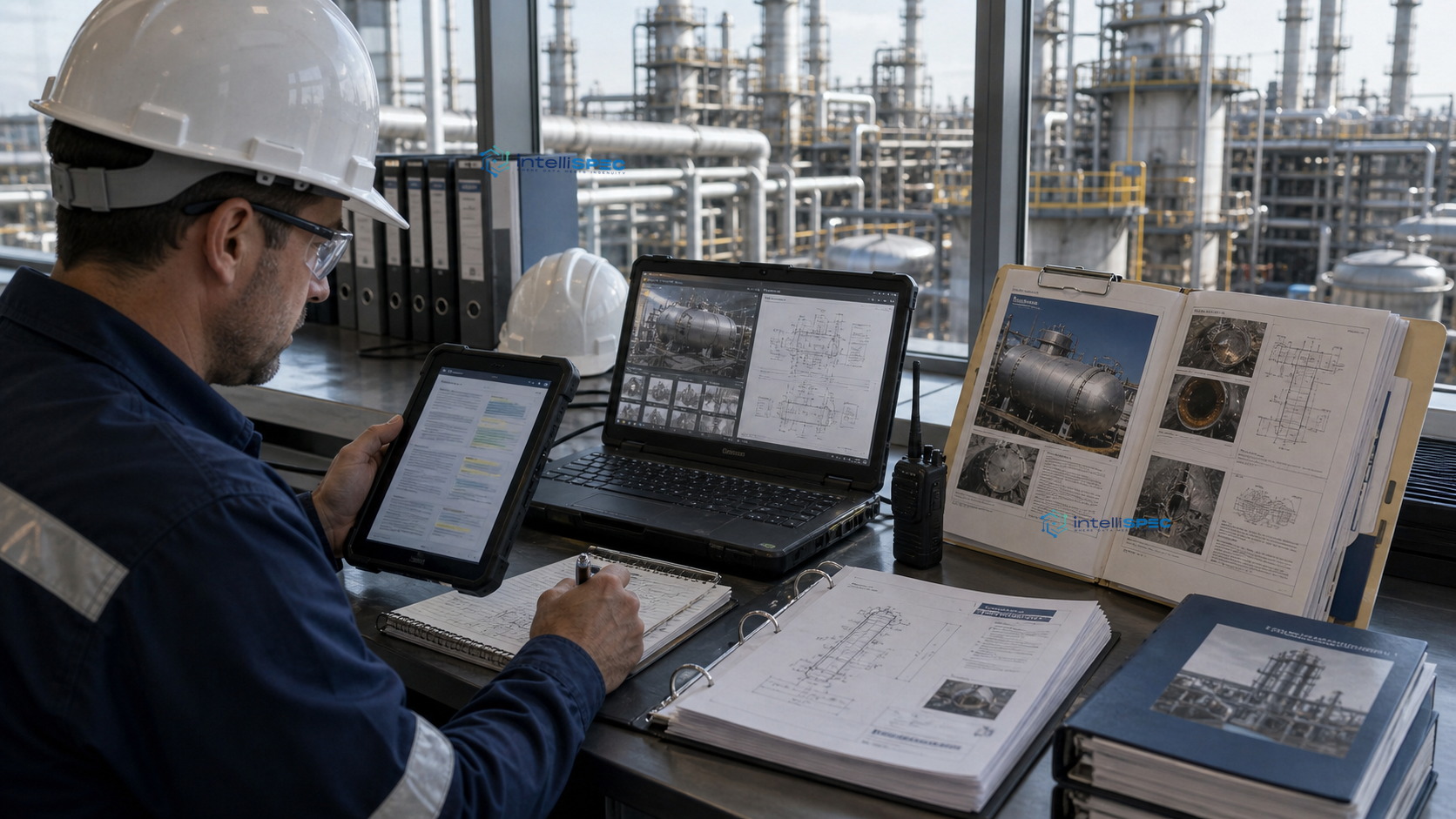
intelliSPEC keeps that history on the equipment record as crews capture it, openings, photos, readings, and repairs in one thread per location, so the next CUI campaign starts from evidence. If CUI is on your list this year, bring a susceptible circuit to a demo and see how the history builds.