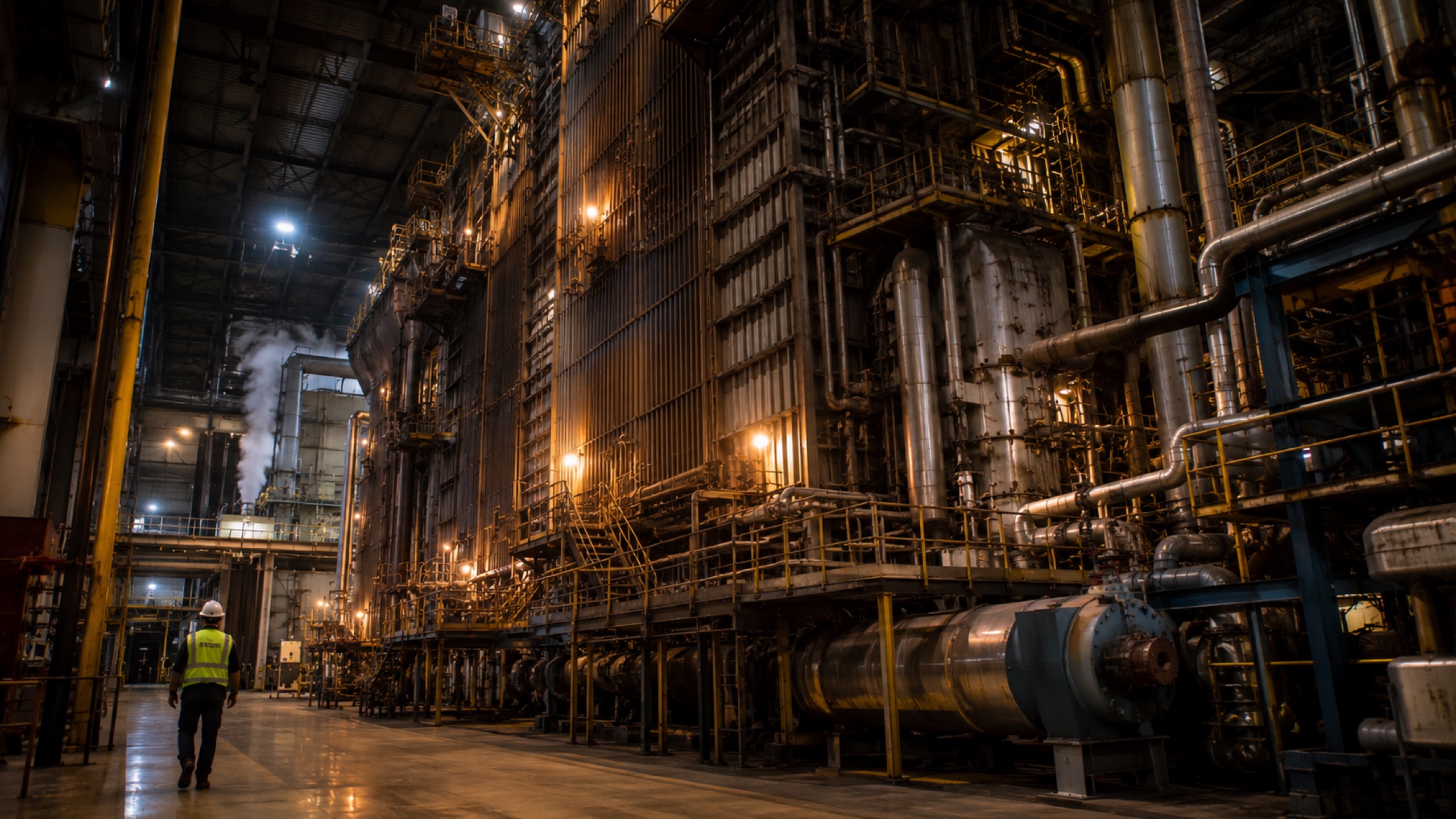
Floor tubes, proven thick enough
intelliNDT holds every UT and PAUT grid on waterwall and floor tubes against BLRBAC minimum wall, with corrosion rate and remaining life computed at capture.
Industry
intelliSPEC gives mill inspectors and reliability engineers one defensible record for recovery boilers, digesters, and bleach plant vessels, from BLRBAC and NBIC to EN 12952, at every mill in the fleet.
Sector record
Smelt-side thinning, caustic cracking, and near-drum corrosion are documented failure modes. What most mills cannot produce is proof of where they stand on each one, tube by tube, vessel by vessel.
Where mills get hurt
Smelt-side thinning, caustic cracking, and near-drum corrosion are documented failure modes. What most mills cannot produce is proof of where they stand on each one, tube by tube, vessel by vessel.
intelliNDT holds every UT and PAUT grid on waterwall and floor tubes against BLRBAC minimum wall, with corrosion rate and remaining life computed at capture.

intelliINTEGRITY screens continuous and batch digester shells for caustic cracking and thinning against API 579, so run, repair, or replace is a documented verdict, not a hallway call.
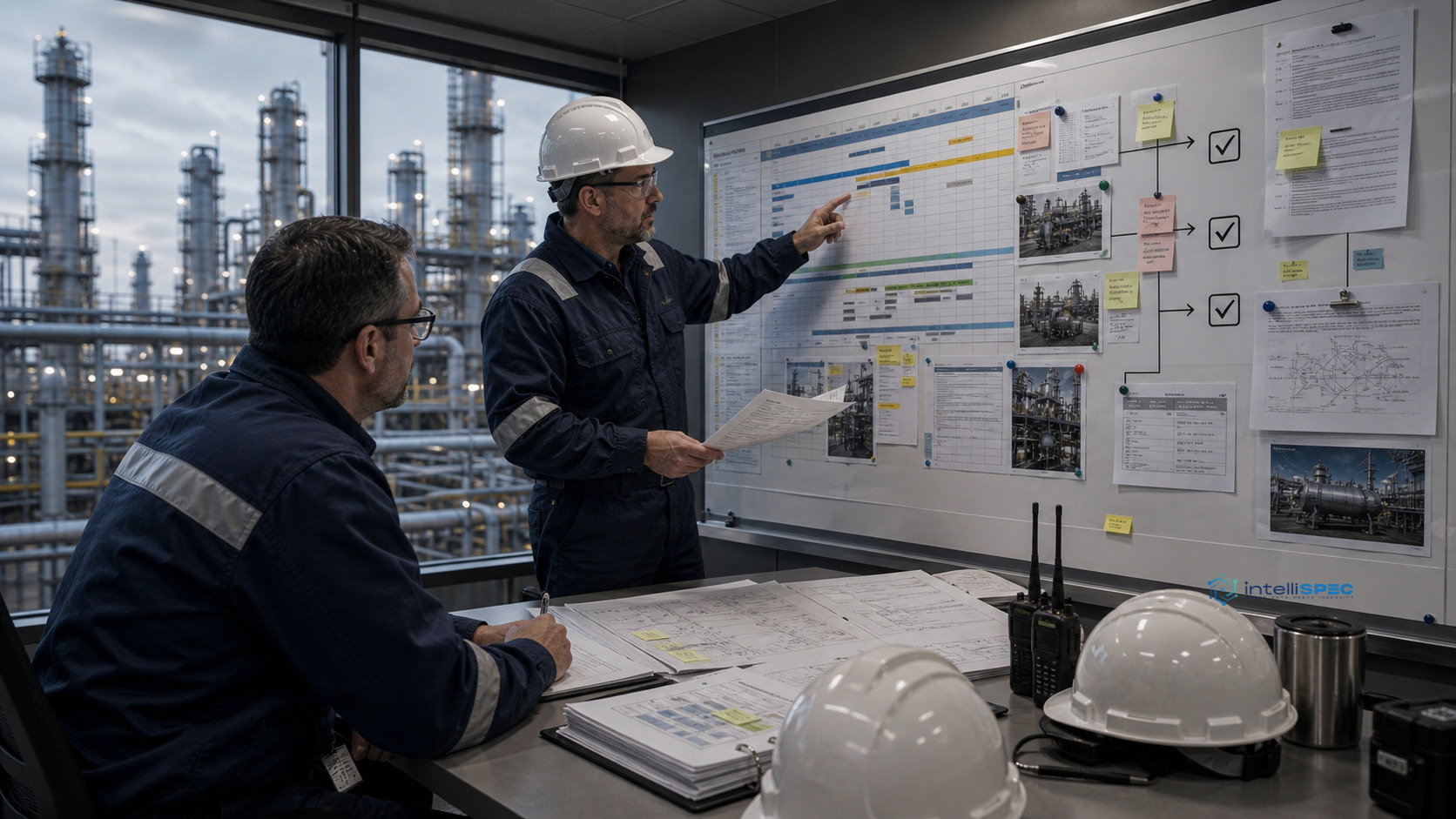
intelliINSPECT runs visual inspections of ClO2 generators, washers, and towers on TAPPI aligned checklists, offline where the plant kills signal, signed off at the point of work.
intelliTURN tracks every scope item and hold point through the cold outage, so the boiler restarts on closed evidence under NBIC, not on a promise.
The cold outage
Follow one recovery boiler from waterwall entry to restart, and watch the record close behind the work.
Inspectors log thousands of UT points on floor and wall tubes with no signal inside the boiler. Each reading lands against the exact tube and elevation, and syncs the moment it reaches the deck.
Corrosion rates recompute against BLRBAC minimum wall as data lands. Tubes that fail screening route to API 579 assessment, and the repair list is on the planner's desk before the morning meeting.
Every reading, weld map, and hold point sign-off closes into one restart file tied to the component. When the jurisdiction inspector or the insurer asks under NBIC, the answer is the record, not a search.
Proof path
Bring one recovery boiler's thickness history and we will walk the record from first UT grid to restart sign-off.
Recovery boiler waterwall, floor, and superheater surveys run on BLRBAC guidelines through intelliNDT, with corrosion rates computed at capture.
Digester shells and ASME Section VIII vessels screened against API 579 in intelliINTEGRITY before every run, repair, or replace call.
Outage scope, gates, and restart evidence closed in intelliTURN, mapped to NBIC and EN 12952 for mills on either rule set.
Answers
Yes. Waterwall, floor tube, superheater, and economizer inspections are captured as structured records aligned to BLRBAC recovery boiler guidelines, with smelt-side findings held against the specific tube, elevation, and outage.
UT and PAUT grids are captured offline inside the boiler through intelliNDT, mapped to tube and elevation, with corrosion rate and remaining life computed against BLRBAC minimum wall as readings land.
Yes. Digester shell inspections, crack indications, and thickness data are held per vessel in intelliINTEGRITY and screened against API 579 fitness for service before a run, repair, or replace decision.
Mills run outage scope, gates, and closeout in intelliTURN, with every recovery boiler and digester work item tied to its inspection evidence so restart approval is a review, not a reconstruction.
Yes. intelliINSPECT and intelliNDT capture inspections and thickness readings with no connectivity inside the waterwall or a digester, then sync with full history once the inspector reaches signal.
Yes. The same record maps to ASME Section I and VIII alongside EN 12952 water-tube boiler and EN 13445 pressure vessel rules, so a multi-region producer audits every mill on one thread.
In-service inspection records for boilers and pressure vessels follow NBIC NB-23 conventions, with each vessel's history, repairs, and sign-offs retrievable by component when the jurisdiction or insurer inspects.