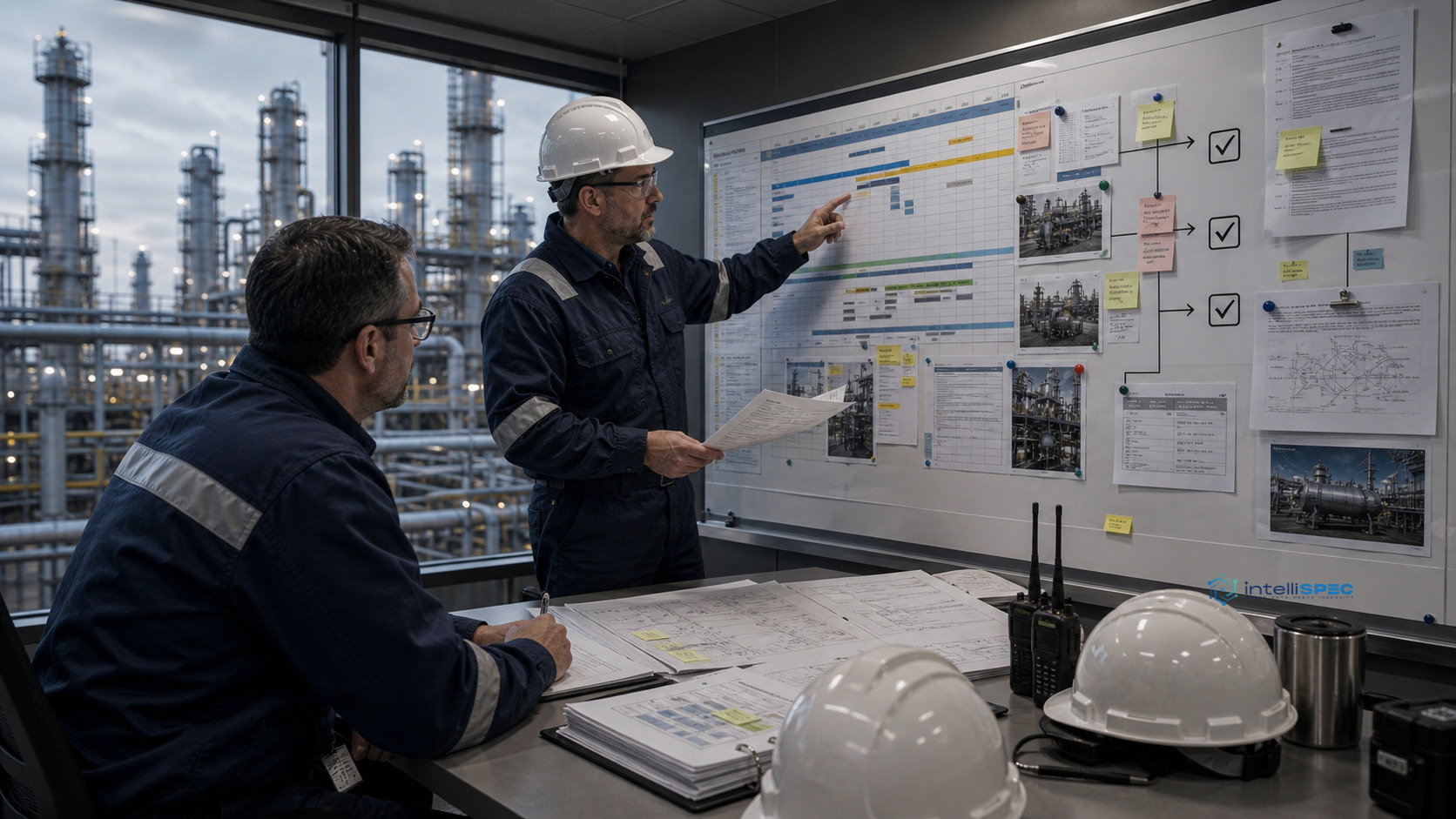
Crane and guard rounds, signed per shift
Crane, guard, and equipment rounds run as guided inspections to OSHA 1910.179 and ASME B30.2, captured offline behind the compressor house and signed off per shift.
Industry
Plant engineers keep boilers, cranes, vessels, and steam piping inspected and defensible on one record, whether the site answers to ASME and OSHA or EN 13445 and the PED.
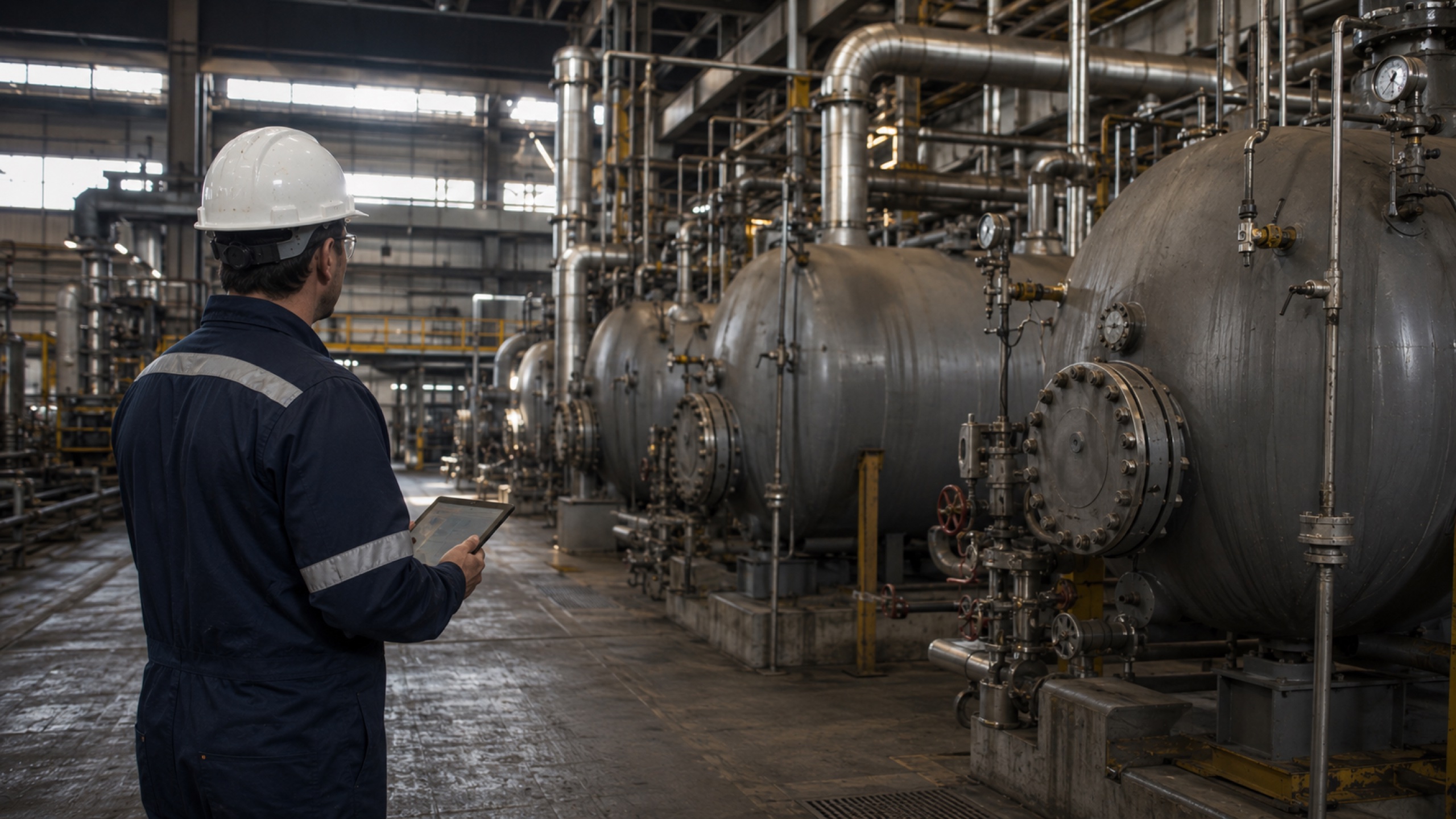
Shift evidence loop
The boiler room, the compressor house, and the crane rail rarely make the quality manual, but they write the downtime report. intelliSPEC gives them the same evidence discipline.
Where the risk lives
The boiler room, the compressor house, and the crane rail rarely make the quality manual, but they write the downtime report. intelliSPEC gives them the same evidence discipline.
Crane, guard, and equipment rounds run as guided inspections to OSHA 1910.179 and ASME B30.2, captured offline behind the compressor house and signed off per shift.
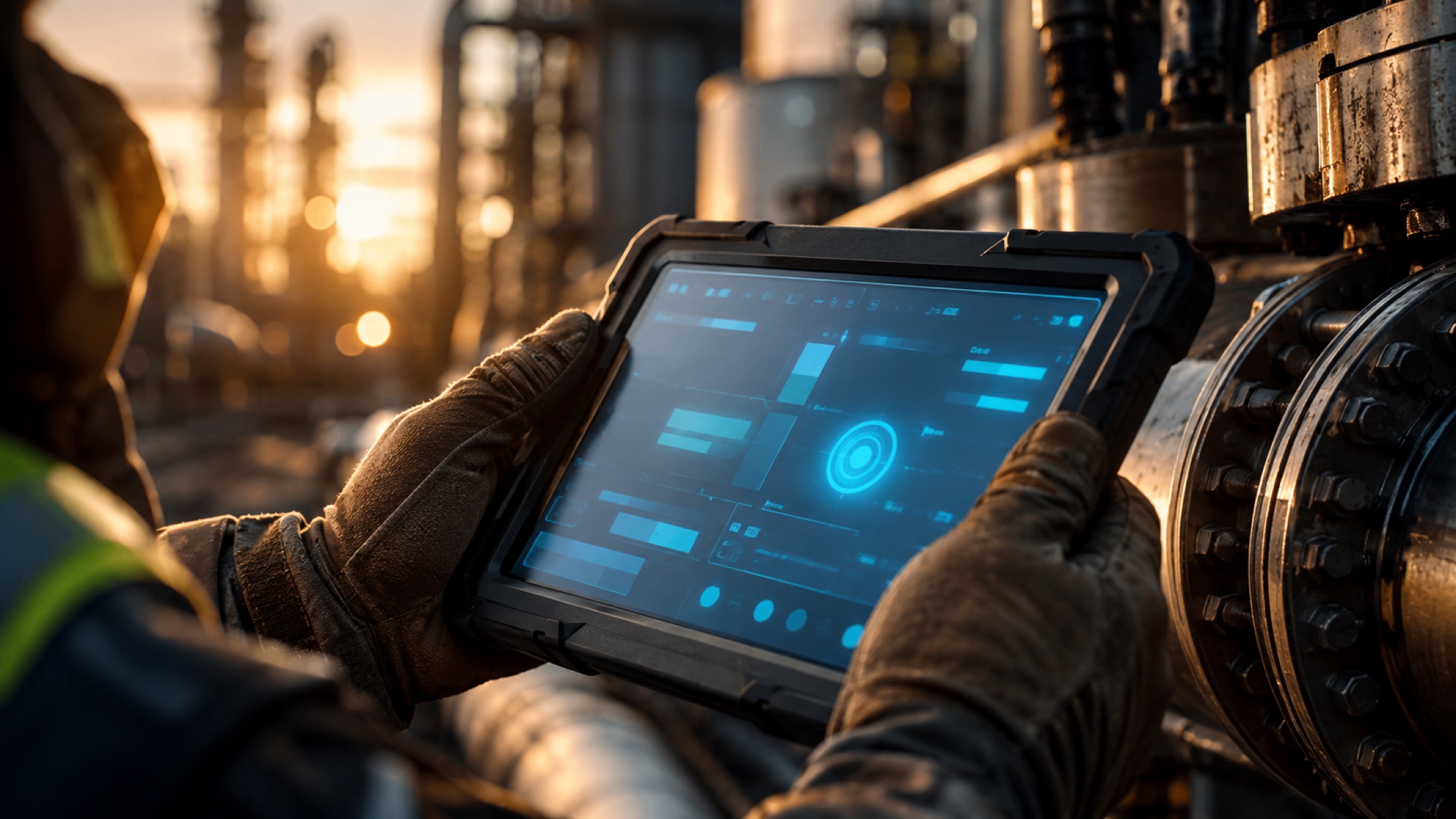
UT thickness on drums, headers, and ASME B31.1 steam piping feeds corrosion rate and remaining life, so thinning shows up as a trend, not a failure.

API 580 and 581 risk-based inspection and API 579 fitness-for-service turn readings into a documented run, repair, or replace call before the jurisdictional inspector asks.
Lockout tagout under 29 CFR 1910.147, permits, JSAs, and the PSM 1910.119 audit trail stay tied to the equipment they protect.
One asset, one day
The same record moves through three sets of hands without being retyped once.
A millwright opens the receiver's inspection on a tablet with no signal behind the compressor house. Photos, gauge readings, and UT points go in offline and sync at the door.
New thickness readings recompute corrosion rate and remaining life. The receiver either holds its NBIC interval or gets flagged for repair, with the work order already routed to the planner.
When the state boiler inspector or the ISO 9001 auditor arrives, the receiver's full history exports in one query. Readings, verdicts, signatures, timestamps.
Proof path
Bring one vessel class and we will map capture, verdict, and proof end to end.
intelliNDT computes corrosion rate and remaining life from UT readings on ASME B31.1 steam piping and NBIC NB-23 vessels.
intelliCOMPLY holds the 29 CFR 1910.147 lockout trail and the 1910.119 PSM audit record against the equipment they protect.
intelliINTEGRITY documents run, repair, or replace under API 580, API 581, and API 579 before the shutdown window opens.
Answers
Yes. In-service inspections, UT readings, and repairs are held per vessel with its inspection interval, so the record the Authorized Inspector reviews is complete when they arrive. intelliSPEC keeps the evidence; the jurisdictional inspection itself stays with the inspector.
Plants run 29 CFR 1910.147 lockout tagout in intelliCOMPLY, with each isolation captured against the specific machine, the authorized employee, and the annual procedure review. The audit trail assembles per asset instead of per binder.
Frequent and periodic crane inspections under OSHA 1910.179 and ASME B30.2 run as guided checklists in intelliINSPECT, tied to the specific crane with photos and sign-off. Deficiencies route to a corrective action with an owner and a closeout date.
Yes. intelliNDT holds UT thickness readings against ASME B31.1 piping and boiler pressure parts, computes corrosion rate and remaining life from the history, and flags circuits approaching retirement thickness.
For covered processes, mechanical integrity inspections, permits, incident records, and audit findings are held on one PSM trail in intelliCOMPLY. intelliSPEC organizes the record and does not certify PSM compliance on your behalf.
Every inspection, reading, corrective action, and approval carries user, timestamp, and signature, so the documented evidence an ISO 9001 audit expects exports as one query instead of a month-end assembly. The platform holds the record; it does not issue the certification.
Yes. A European site can map pressure equipment checks to EN 13445 and the Pressure Equipment Directive while a US plant runs the same record against ASME and OSHA, with one audit trail across both, online or offline.