
Shell condition captured at the kiln
intelliINSPECT logs hot-spot findings, refractory zones, and tire and roller condition offline on the kiln deck, signed on the spot, and files quarry and plant walkdowns as MSHA 30 CFR examination records.
Industry
intelliSPEC gives cement reliability teams one record for kiln shell scans, refractory history, silo verdicts, and outage scopes. The same record runs at a single works or across a global group, from the quarry face to the dispatch silo.
Sector record
Shell wear nobody trended, refractory that came due mid campaign, silo steel checked from memory, outages that slip a week. The platform puts a workflow and a standard on each.
Heavy fixed plant
Shell wear nobody trended, refractory that came due mid campaign, silo steel checked from memory, outages that slip a week. The platform puts a workflow and a standard on each.
intelliINSPECT logs hot-spot findings, refractory zones, and tire and roller condition offline on the kiln deck, signed on the spot, and files quarry and plant walkdowns as MSHA 30 CFR examination records.

intelliNDT holds ultrasonic thickness on shell sections, tires, and preheater ducts, then computes wear rate and remaining life, so the next reading lands on measured metal loss, not the calendar.
intelliINTEGRITY dispositions silos, hoppers, and structural steel against EN 1991-4 actions and EN 1993-4-1 shell rules, with run, repair, or replace called under API 580 and 581 discipline.
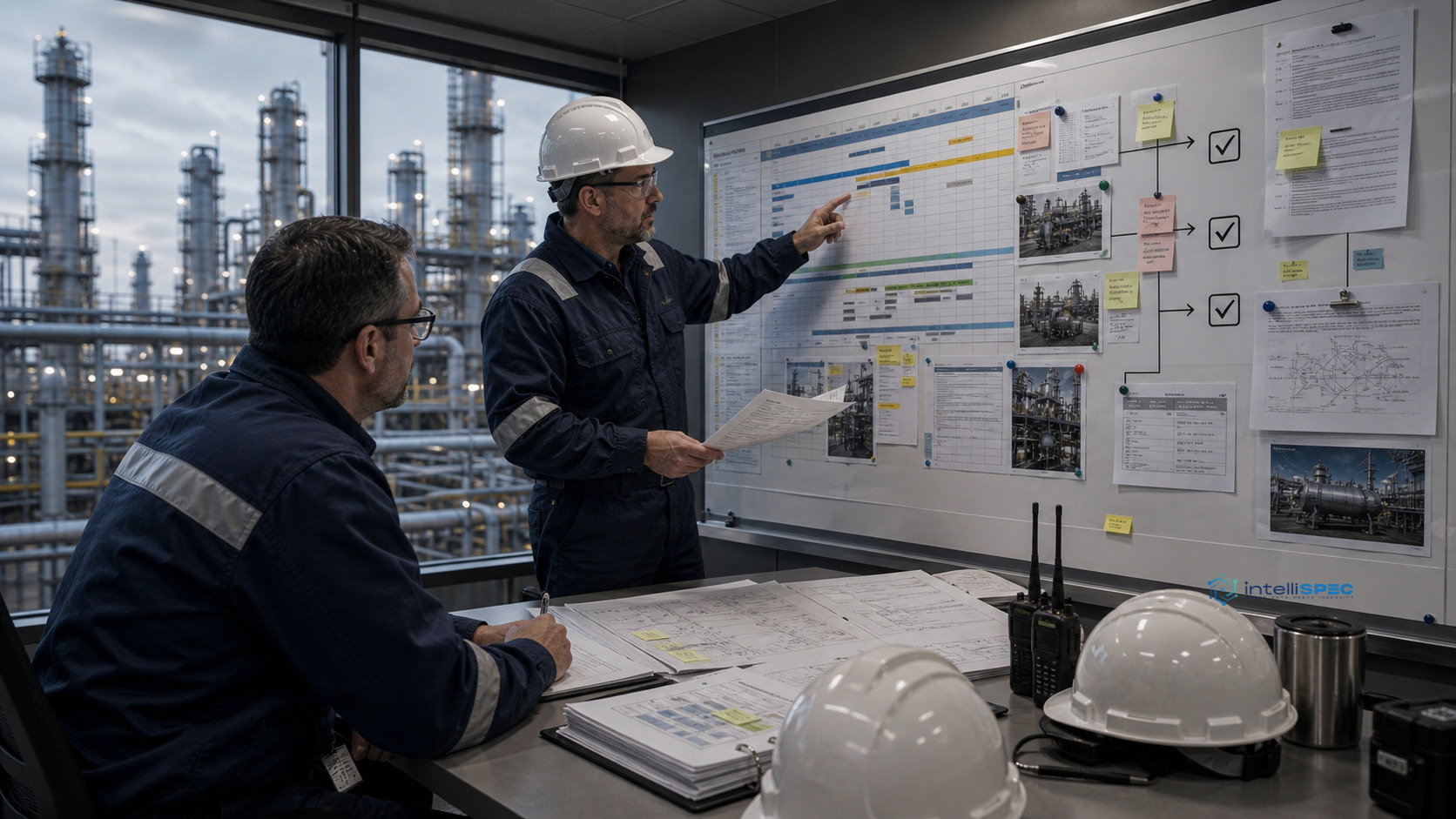
intelliTURN stages the rebricking scope, gate reviews, and critical path for the annual kiln stop, with every inspection finding feeding the scope instead of a spreadsheet.
One finding, end to end
This is what the record does on an ordinary Tuesday at a cement works, from the moment an inspector flags shell section 18 to the day an insurer asks about it.
The inspector flags an IR hot spot on section 18, photographs the tire migration, and logs roller bearing temps, all offline at the preheater tower. Signed and synced before end of shift.
The UT crew's next thickness set lands on the same shell section. Wear rate updates, remaining life shortens, and the API 581 interval and next rebricking scope move with it, automatically, in intelliINTEGRITY and intelliTURN.
When MSHA, the insurer, or the group engineer asks, section 18 exports as one thread: every reading, rate, verdict, signature, and date. No binder hunt, no reconstruction from email.
Proof path
Bring one kiln's shell and refractory history and we will show you the wear trend, the verdict, and the audit path in a single session.
Captures kiln shell, refractory, and quarry walkdown findings offline with intelliINSPECT, filed as MSHA 30 CFR examination records.
Computes shell, tire, and preheater duct wear rate and remaining life from intelliNDT ultrasonic readings, so measured loss sets the next scan.
Dispositions silos and structural steel against EN 1991-4 and EN 1993-4-1 in intelliINTEGRITY, with run or repair called under API 580 and 581.
Answers
Yes. Hot-spot findings, refractory thickness by zone, and tire and roller condition are captured offline at the kiln with intelliINSPECT, each signed and timestamped. That history drives the next rebricking scope instead of living in one engineer's head.
intelliNDT logs ultrasonic thickness on shell sections, tires, rollers, and preheater ducts, then computes wear rate and remaining life per location. The next scan is scheduled on measured metal loss under API 580 and 581 risk-based inspection, not on a fixed calendar.
Yes. Silos, hoppers, and structural steel are dispositioned in intelliINTEGRITY against EN 1991-4 actions on silos and EN 1993-4-1 steel shell rules, with run, repair, or replace recorded on evidence.
intelliTURN stages the outage scope, gate reviews, and critical path for the kiln stop, and pulls shell and refractory findings straight from the inspection record. Scope grows from evidence, and the restart date holds because the gates are visible.
Yes. Workplace examinations, defect findings, and corrective actions at the quarry and crushing plant are captured offline at the face with user, timestamp, and signature, and export for MSHA 30 CFR review as one query.
Yes. intelliPAINT records DFT readings, dew point, and hold points against EN ISO 12944 coating systems, building a databook per structure so repaint decisions rest on measured film and environment, not on appearance.
Yes. The same record runs at every works, online or offline, so a group holds one inspection standard and one audit trail across kilns, silos, and quarries regardless of local crew, language, or connectivity.